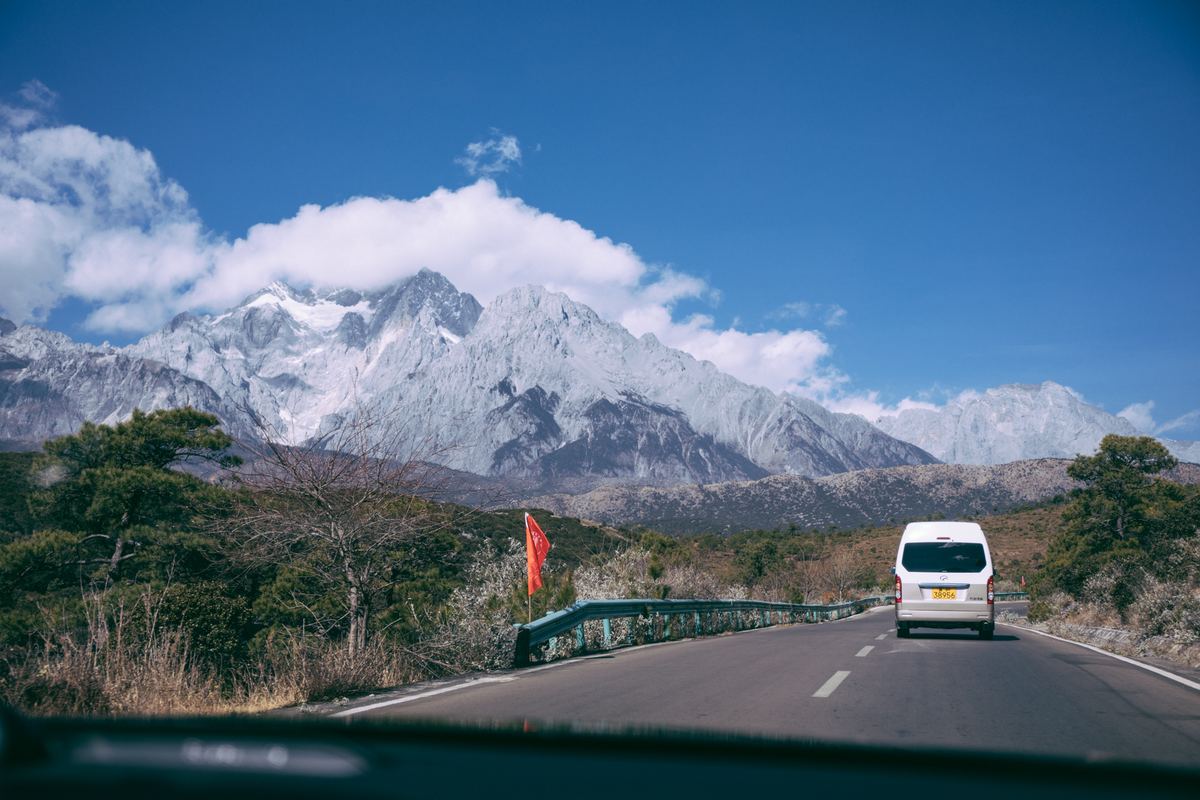
Last July, I was halfway up the twisty climb towards the Baima Snow Mountain Pass when the rain hit. Not the soft, drizzly summer rain I’d grown used to in Kunming, but a heavy, cold sheet that turned the tarmac glossy black in seconds. Ten minutes later, a cluster of orange-jacketed road workers waved us to a stop: a 200-metre stretch of the road ahead had washed out, and we’d be turning back to Deqing for the night. That trip was my first real lesson in how quickly summer weather can derail even the most carefully mapped Yunnan road trip, and it’s a lesson I wish I’d known before I booked my car. If you’re planning to do Yunnan self-drive rental for foreigners this summer, this is the stuff the glossy route guides won’t tell you.
Why summer rain hits Yunnan roads differently than you expect
Yunnan’s summer runs from June to August, when the warm, wet monsoon air rolls up from the south and dumps most of the year’s rainfall across the province. The routes most travellers stick to — the loop from Kunming out to Dali, Lijiang, and up to Shangri-La — aren’t just flat, well-paved motorways. A lot of the most scenic stretches cut through steep mountain gorges, where the rock sides are crumbly and the drainage ditches get clogged with silt after even a few hours of steady rain.
I remember stopping for a tea in a tiny village halfway between Lijiang and Shangri-La that same trip, when an old local farmer pointed to the road above us and said, “When the rain comes hard, the mountain moves.” He wasn’t exaggerating. The day before we hit that washout, a small landslide had blocked the road just south of Tiger Leaping Gorge, closing it for six hours while crews cleared fallen boulders and mud. None of that was listed on the app I’d used to map my route three days earlier.
You don’t have to be heading up to the high mountain passes to get caught out either. A friend of mine who did Kunming airport car rental for foreigners last summer planned a day trip out to the Stone Forest, only to find the main access road flooded in a sudden downpour, turning a 90-minute drive into a three-hour detour through narrow village lanes. Summer rain here doesn’t just make the roads wet — it can close them, fast.
How to plan a trip that bends, not breaks, when roads close
The mistake I made on that first trip was building an itinerary that had zero slack. I’d booked three nights in Shangri-La, two in Lijiang, two in Dali, with fixed departure times each morning, no buffer for delays. When that pass closed, I lost half a day of driving, and suddenly I was rushing to make all my bookings, stressed instead of enjoying the views.
Now, when I plan a Yunnan trip in summer, I build in two full “flex days” across a two-week itinerary, usually placed between the higher-altitude stops. If a road closes, I don’t panic — I just shift my schedule by a day, stay an extra night in Dali or Lijiang, and wait for crews to clear the route. Most minor closures last 12 to 24 hours, enough to dry out the tarmac and clear debris, so you rarely need to rewrite your whole trip.
I also don’t lock myself into one single route between stops. Between Kunming and Dali, for example, there are two parallel road options: the main motorway, and the older, slower mountain road that passes through smaller towns. If the motorway gets blocked by a landslide, the older road is usually still passable, just slower. I check local road updates at every overnight stop before I turn in, asking the guesthouse owner what the road conditions are like for the next leg — local gossip is often faster than any official update feed.
For travellers doing Dali Lijiang car rental for foreigners, I’d also suggest avoiding the temptation to drive after dark when it’s rained. The mountain roads get cold fast once the sun goes down, and wet patches can turn to slick ice even at lower altitudes, long before you hit the high passes. I once tried to make up lost time by driving a stretch after 8pm, and hit a slick, unmarked patch of wet road that sent the car skidding slightly on a bend — enough to make me swear I’d never do that again.
Practical rental details to keep front of mind for summer travel
When you’re booking a car for summer Yunnan travel, the vehicle choice matters more than you might think. The petrol models available for rent are the VW Lavida 1.5L and Jetta 1.4T, priced at RMB 260 per day, with a RMB 3,000 rental deposit and unlimited mileage. These are perfectly reliable for the main Kunming-Dali-Lijiang-Shangri-La loop, even on wet tarmac. If you’re planning to pull off onto rougher side roads to visit smaller villages, the Tank 300 2.0T is an option at RMB 400 per day, with a RMB 5,000 rental deposit and a 300km per day mileage limit.
One thing to note: if you plan to pick up your car in Kunming and drop it off in Lijiang, there’s a one-way return fee of RMB 1,500. For documentation, a China temporary driving licence can be arranged for RMB 1,500 without you needing to attend in person, so you don’t need to sort that out before you fly into the country.
The insurance cover included with the rental covers compulsory and commercial protection. Minor scratches under RMB 1,500 are paid by the driver, while damage above that amount goes through insurance, with the driver covering 30% of the cost. If a scratch doesn’t damage the paint primer, there’s no charge at all, and no downtime or depreciation fees for paintwork or replaced parts — downtime charges are waived for up to 5 days if you have major damage. If the car breaks down for a mechanical reason, the rental provider covers the cost; if you cause the breakdown, towing fees are on you. The RMB rental deposit is refunded 5-7 working days after you return the car, once all traffic fines are checked. Just remember: if you cancel your booking for personal reasons, the RMB 600 booking deposit is non-refundable.
On that trip where we got turned back from the Baima Pass, we ended up pulling over at a roadside teahouse, drinking hot butter tea while the rain hammered the tin roof. The road crew chief stopped by for a cup, and told us most summer closures on that stretch only last a day or two — we just hadn’t checked the local updates before we set out that morning. The car we’d rented, a Jetta, handled the wet detour back to Deqing without a fuss, and we only lost half a day, not the whole trip.
Summer in Yunnan is still one of the best times to drive the loop, even with the rain. The terraced fields are bright green, the lakes in Dali are a vivid turquoise, and the mountain views clear up between rain showers. You just have to plan for the closures, not against them.