Route overview
Four days from Hangzhou, arranged as a Rental Car for Foreigners in China: south first to Tiantai for Guoqing Temple and the Shiliang falls, then north to Anji for the great bamboo forest and Canglong falls, returning to Hangzhou. About 490km, expressway for two days then hill roads with bends but good surfaces, suiting anyone after old temples, waterfalls and bamboo.
Highlights
- See the Sui dynasty Guoqing Temple and its pagoda
- Watch the Shiliang falls run under a natural stone bridge
- Walk into stands of moso bamboo at Anji
- Follow the chain of falls at Canglong
Suggested itinerary
- Day 1D1 Hangzhou to Guoqing Temple in Tiantai, 200km
- Day 2D2 Tiantai to Anji bamboo forest, 200km
- Day 3D3 A day in the Anji bamboo country, about 30km
- Day 4D4 Anji back to Hangzhou, 90km
Day by day
D1 Hangzhou to Guoqing Temple, Tiantai
Total driving today 200km
Guoqing Temple
Guoqing Temple at the southern foot of Tiantai Mountain was founded in the Sui and is the ancestral temple of the Tiantai school. The Fenggan bridge and Sui pagoda mark the entrance, the pagoda a nine-storey brick tower without eaves and archaic in form. Main hall, medicine hall and Guanyin hall line up inside, an old plum said to date from the Sui blooms in winter, and an old well and Tang steles remain. Parking faces the temple, the approach is flat, floors are stone and brick with a few steps at the halls, two hours covers it, vegetarian noodles are served at midday, photography indoors is not done, and monks' quarters stay off limits. Guests on a Rental Car for Foreigners in China usually start their Tiantai day here.
Shiliang Falls
Shiliang falls lie deep in the Tiantai reserve where a stream passes under a natural stone bridge formed by two boulders and drops tens of metres into a pool, the bridge less than a metre wide and counted among China's rarities. A valley path of about forty minutes leads in on stone and steps between water and bamboo, passing two small temples where you can rest. A platform faces the fall, spray soaks clothing and cameras need cover, and the poolside rock is slick enough to keep back from. Parking is at the entrance, the path has many steps, elders should take it slowly, the return takes two hours, and the flow is biggest in the rainy season.
- Where to eat
- Tiantai is known for rolled pancakes, wheat cakes and temple vegetarian food; the noodles at Guoqing are cheap and filling.
- Roads and driving
- Shangyu-Sanmen expressway from Hangzhou to Tiantai, motorway throughout, then a provincial road into the hills with bends.
- Where to stay
- No accommodation is booked; guesthouses at the Tiantai reserve gate are convenient.
Tips for the day
- Do not photograph monks or interiors
- The Shiliang path is wet, wear grippy shoes
- In the rainy season the platform is capacity-limited
D2 Tiantai to the Anji bamboo forest
Total driving today 200km
Anji Great Bamboo Forest
The great bamboo forest at Gangkou in southern Anji, a location for Crouching Tiger Hidden Dragon, covers whole slopes in moso bamboo fifteen metres tall, so that wind makes the stand heave like surf. A cable car and a slide serve the hill, or you walk up in about forty minutes on a mix of bamboo boardwalk and stone steps past platforms looking over the canopy and villages beyond. Parking is at the foot, the approach to the cable station is flat, the steps are many and tiring, mosquitoes are thick in the groves, so long trousers and repellent are needed, and the shade is far cooler than outside in summer.
Canglong Hundred Falls
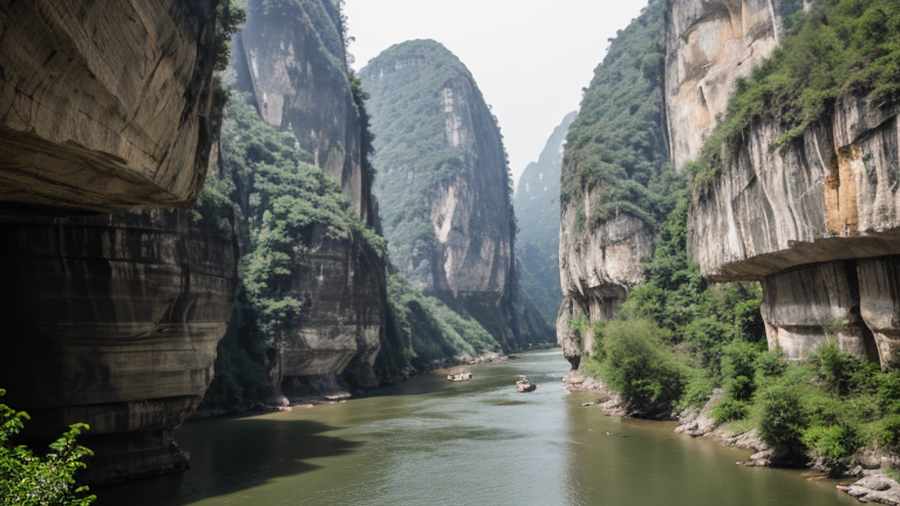
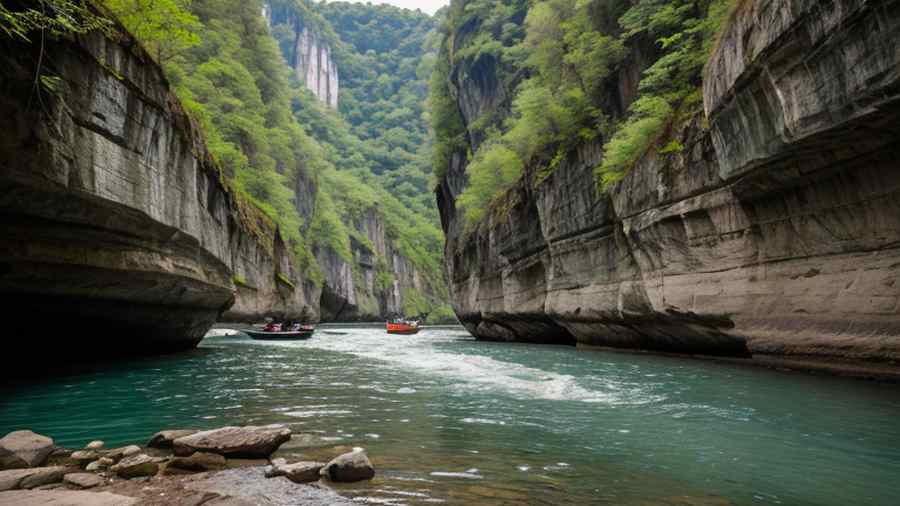
Canglong falls in Tianhuangping, Anji, is a valley of a dozen linked cascades and plunge pools stepping down the stream, with boardwalks and small bridges on a circuit of about ninety minutes. The walk hugs the water, several flights are steep and the boards slick in damp weather, so grip the rail; pools are clear enough to see fish and wading is not allowed. Parking is at the entrance, the approach is flat, the gorge is deeply shaded and cool in summer, the flow is heaviest in the rainy season when the falls drown out voices, and a stall at the exit sells water and ice, so eat lunch in town.
- Where to eat
- Anji cooks pork with dried bamboo shoots, free-range chicken and white-tea prawns; farm restaurants in town handle bamboo dishes well.
- Roads and driving
- Changtai expressway, the Hangzhou ring, then roads toward Anji; motorway most of the way with a hill road at the end.
- Where to stay
- No accommodation is booked; guesthouses near the bamboo forest are the natural choice.
Tips for the day
- Bamboo groves have heavy mosquitoes
- Cable car last runs shift by season, ask first
- Gorge boardwalks are slick, use the rail
D3 A day in the Anji bamboo country
Total driving today about 30km
Yunshang Grassland
Yunshang grassland sits on a ridge above Shanchuan in Anji at over 1,100 metres, a summit meadow that runs green to the horizon in summer and rimes over in winter, with platforms, a camping area and the slope used for paragliding take-offs. The mountain road is narrow with tight bends and needs a slow pace; parking is at the top, a gentle slope leads onto the grass, which is soft underfoot and suits trainers, and the summit is windy and cold enough to want a jacket even in summer. Avoid the top in thunderstorms, and there is only a small shop, no restaurant.
Yucun Village
Yucun in Tianhuangping, Anji, is the village often cited in Zhejiang's rural renewal, marked by a stele at the entrance quoting the line about green hills being gold. Quarries and a cement plant were closed and the village turned to guesthouses, bamboo workshops and cycle paths. It follows a stream, shallow and clear, with bamboo fences and vegetable plots on both banks; a forty-minute circuit passes cafes in old houses and a workshop where baskets are woven in front of you. Parking sits at the entrance, the approach and lanes are flat without steps, good for children, and farm restaurants serve meals.
- Where to eat
- Yucun and Shanchuan have farm restaurants serving bamboo, chicken and stream fish at fairer prices than inside the reserves.
- Roads and driving
- Anji hill roads are narrow with hairpins, slow for oncoming traffic, and unlit at night.
- Where to stay
- No accommodation is booked; a second night in Yucun or Shanchuan is easy.
Tips for the day
- Narrow hairpins, slow and pull over early
- The summit is colder, bring a jacket
- Stay off the grassland in thunderstorms
D4 Anji back to Hangzhou
Total driving today 90km
Anji Bamboo Museum
The Anji bamboo museum south of the county town collects hundreds of species from China and abroad, from thick moso to ornamental kinds thin as chopsticks, planted in blocks with labels giving names and uses. A weaving hall shows baskets being made and a panda house draws children, and electric carts run the grounds. A circuit takes an hour and a half on level ground with no steps, the groves give shade, and a shop at the exit sells cups and mats. Parking faces the gate with a flat approach.
Lingfeng Temple
Lingfeng Temple on Lingfeng hill north of Anji town was founded in the Five Dynasties period, halls climbing the slope from gate to main hall, with a ginkgo said to be a thousand years old that turns gold in autumn and carpets the paving. The compound is small and takes forty minutes; statues and murals were restored in recent years, and a tea plot behind the halls is still picked by monks. Parking is in front, the approach is a gentle slope, floors are level stone with a few steps at the halls, free tea is offered, photography indoors is not done, and a path outside the gate makes a pleasant stroll.
- Where to eat
- On the way back, a bowl of dried bamboo shoot noodles in Anji town works, or eat once you reach Hangzhou.
- Roads and driving
- Hangzhou-Changxing expressway from Anji, motorway throughout, with an evening peak at the city end.
- Where to stay
- No accommodation is booked; return the car at the Hangzhou pickup point.
Tips for the day
- No photographing statues, keep quiet
- The last park cart runs half an hour before closing
- Refuel in Hangzhou before returning
Pages that help on this route
- Rental packages and what is included
- Temporary driving permit in China
- All routes by province
- All cars in the fleet
Costs to expect
Included: basic vehicle use and route guidance notes. Excluded: tickets, parking, fuel, meals, accommodation and personal spending.
Driving tips
- Keep quiet in Guoqing Temple and do not photograph monks
- Shiliang steps are wet, careful after rain
- Bamboo forest has heavy mosquitoes
- Hill roads are bendy, avoid night driving