Route overview
A rental car for foreigners makes this straightforward: A short flat loop east of Tianjin: out to Ninghe for the Qilihai wetland and the old streets of Lutai, then down to the Binhai coast for the fishing village at Dashentang, Beitang old town and the Mazu temple. Mostly plain roads and coastal highway, easy driving, good for a first self-drive in China.
Highlights
- Qilihai wetland
- Tianzun pavilion
- Lutai old street
- Dashentang fishing village
- Beitang old town
- Mazu cultural park
Suggested itinerary
- Day 1D1 City to Ninghe, about 70 km (Tianzun pavilion, Qilihai wetland, Lutai)
- Day 2D2 Ninghe to Binhai Beitang, about 70 km (Dashentang, Beitan old town, Mazu park)
- Day 3D3 Binhai back to the city, about 60 km
Day by day
Day 1 City to Ninghe: Tianzun pavilion and Qilihai
About 70 km
Tianzun pavilion
Tianzun Ge stands in Fengtai town, Ninghe, a three-storey timber pavilion whose surviving frame is generally dated to the Ming, rare in this flat country. Taoist images inside, a narrow staircase you climb holding the rail, and from the second floor a view over the town roofs. No entry fee, incense money optional. Park on the small square at the town mouth; the old street is too narrow to turn in. Half an hour covers the building, longer if you care about the original bracket sets under the beams.
Qilihai wetland
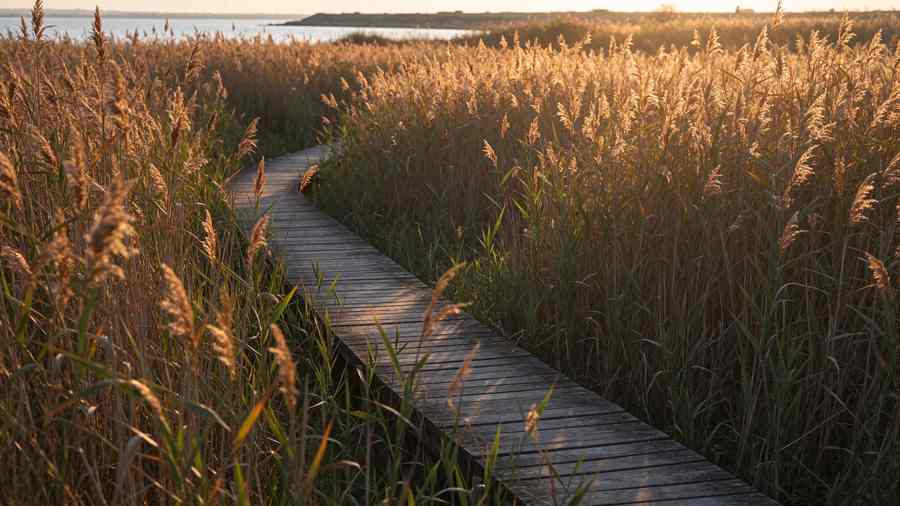
Qilihai is the largest reed wetland in Tianjin, a lagoon left by an old bay, water and reeds running together, with birds stopping here in spring and autumn. The core is closed; what you walk is the outer boardwalk and bird hides, raised over the reeds, forty minutes for the loop. Reeds stand above head height in summer and rustle in the wind; in autumn the seed heads turn yellow and photograph best. The boardwalk closes in strong wind, so ring ahead. Park at the entrance and walk in, do not drive onto the embankment.
Lutai old street
Lutai is the county town, once a grain and salt staging point on the canal. What remains is one short street of shopfronts selling sesame paste, cakes and pickles, a few shops that have traded for decades, fermented tofu and shrimp paste the specialties. Half an hour covers it, a good stop before dinner. Park outside the street mouth, no cars inside. Best at dusk when the lights come on and the crowd thins.
- Where to eat
- Ninghe river crab and Qilihai carp are the local names, crab fat in autumn; a small restaurant charges about forty CNY for fish braised with cornmeal flatbread. Dinner in Lutai: fried river shrimp and carp braised in bean paste, fifty to sixty a head.
- Roads and driving
- In a rental car for foreigners, jinning expressway out of the city, flat and straight with frequent speed changes, watch the signs. The last stretch to Qilihai is an embankment road barely a lane and a half wide, pull over to pass.
- Where to stay
- Quick hotels in Lutai town around 200 CNY, easy for meals; or guesthouses by the wetland, basic but you wake up to the birds.
Tips for the day
- Boardwalk hours change with the season, check before setting out
- Parking at Lutai old street is tight, avoid weekends
- Crab prices peak in autumn, ask first
Day 2 Ninghe to Binhai: the fishing village and Beitang
About 70 km
Dashentang fishing village
Dashentang is the easternmost fishing village in Tianjin and one of the few on the Bohai coast still putting to sea, wooden-hulled boats at the quay, nets drying ashore. Old houses of stacked sea stone remain, walls laid block on block with tiled ridges. Early morning when the boats come in is the busy hour: unloading and sorting right at the quay, mantis shrimp and small mixed fish straight off the deck. Lanes are narrow, park at the village mouth and walk in, do not drive onto the quay.
Beitang old town
Beitang sits at the river mouth in Binhai, a gun emplacement in the Ming, a grain and fishing wharf by the late Qing. Today it is a rebuilt street of grey brick, seafood restaurants and guesthouses along one main lane, with a small fishery display at the end. The part worth keeping is dusk at the mouth: the embankment looks out on the Bohai, the tide pulls back and boats sit on the mud. No entry fee, a big car park outside the street, queues on holidays.
Mazu cultural park
The Mazu park stands on reclaimed ground by the sea in Binhai, the main hall dedicated to the sea goddess fishermen along the northern coast have always prayed to; Tianjin has had a Tianhou palace for centuries and this is the new one. The grounds are open, the square in front of the hall faces the water, and on a clear day you can see the shipping lane and the freighters. The building is modern classical, painted bracket sets, all new: what you come for is scale and sea. Free entry and free parking, busy with walkers at dusk, and windy enough to lose a hat.
- Where to eat
- Mantis shrimp and crab at the Dashentang quay are sold by weight; village restaurants cook them for twenty or thirty CNY a dish. Seafood restaurants in Beitang run about a hundred a head, confirm seasonal prices before ordering.
- Roads and driving
- In a rental car for foreigners, ninghe to Binhai on the coastal avenue, wide and quiet but watch the trucks. Village lanes are narrow with nets drying, do not run over them. Beitang to the Mazu park is fifteen minutes along the sea wall, grip the wheel in crosswind.
- Where to stay
- Guesthouses inside Beitang old town, 200 to 300, an evening walk to the river mouth; better facilities in the Binhai city hotels.
Tips for the day
- The quay is busiest five to six in the morning
- Seafood is sold by weight, watch the scale
- Take a jacket, the coast is windy
Day 3 Binhai and home
About 60 km
Haihe river mouth
On the way back, loop past the mouth of the Haihe: a narrow channel with the old Tanggu wharves on one side and new port ground on the other, freighters queuing to enter. A footpath runs along the embankment, ten minutes to the water, and the wind means you will not stay long. This is the root of old Tanggu, where grain and salt boats came in; a few warehouses turned into creative parks remain. Parking is easy, marked bays along the road.
- Where to eat
- Seafood dumplings in Tanggu on the way out, mackerel the usual filling, about thirty CNY a portion; or wait and eat in the city.
- Roads and driving
- Take the Jinbin expressway or the coastal avenue back; city-bound traffic is heavy from half seven to nine.
- Where to stay
- Back to the city today, no overnight stop. One more night in Binhai puts the national maritime museum on tomorrow.
Tips for the day
- The mouth is windy, keep children back from the edge
- Avoid the morning peak into the city
- The maritime museum needs booking
Costs to expect
Fuel, tolls, parking and tickets are paid as you go; the rental car for foreigners is booked separately. No package price is quoted here.
Driving tips
- Wetland boardwalks close in strong wind, check the forecast
- Seafood prices on the coast are seasonal, ask the price per half kilo first
- Coastal roads fog over in spring mornings