Route overview
Day one drops from the city to the Dagu mouth for the gun battery and the river edge; day two spends the morning on Dongjiang Bay's sand; day three works the central fishing port and Lingang wetland for boats and birds; day four runs back in on the coastal expressway. Everything sits inside two hundred kilometres on wide, well-signed road with no hills at all. A soft first drive into the new district for a Rental Car for Foreigners in China.
Highlights
- Rental Car for Foreigners in China: Dagu's battery ruins and museum fill two easy hours
- Dongjiang Bay, an artificial beach rare on the Bohai, colour depending on the wind
- The fishing port market before six, catch landing straight off the boats
- Lingang boardwalk into the reeds, best from the hides in autumn
Suggested itinerary
- Day 1D1 Tianjin to Dagu, about 60 km
- Day 2D2 Dagu to Dongjiang Bay, about 20 km
- Day 3D3 Bay to the fishing port and Lingang, about 60 km
- Day 4D4 Binhai back to the city, about 80 km
Day by day
The river mouth at Dagu
About 60 km today
Dagu Fort Ruins
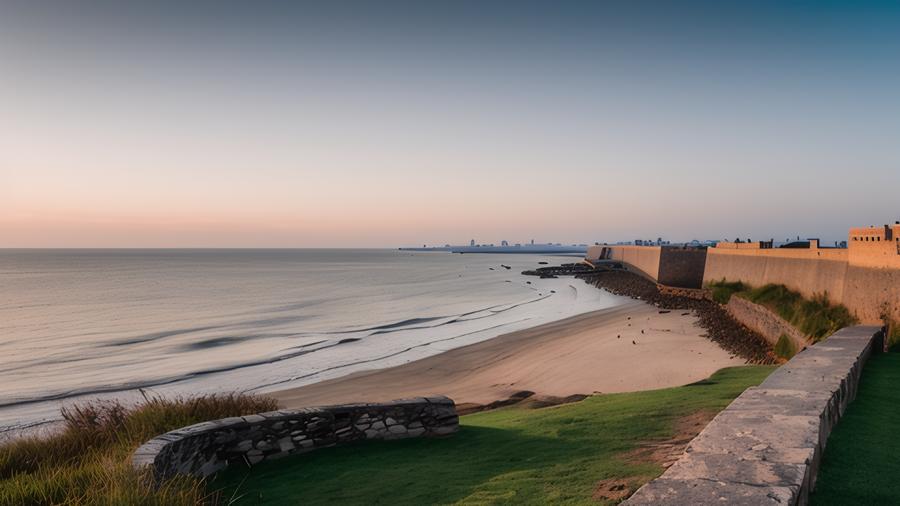
Where the Hai River meets the Bohai, Dagu was Tianjin's door and the capital's seaward gate. Qing batteries were thrown up on both banks, named for their function — Pang character, Wei Yuan and others — and what survives is platform, gun pit, magazine footing and a length of rammed wall. Both battles of the Taku Forts were fought here, and the display explains range and shore layout. The site runs as an open park with a museum room inside. Wind off the river is steady, and from the platform you can read the mouth, the lock and shipping. Lots sit at the gate and stay comfortable before ten in season; brick, stone and grass slopes turn slick in rain.
- Where to eat
- Seafood and guoba cai in Tanggu, Tianjin cooking by the Hai River at night.
- Roads and driving
- Jinbin to Haibin avenues: broad, truck-heavy, limits stepping near the city.
- Where to stay
- Tanggu or the second development line, short for the beach tomorrow.
Tips for the day
- Museum closed Mondays
- The ruins are open sky, so sunscreen in July
- The riverside path suits a dusk walk
Half a day at Dongjiang Bay
About 20 km today
Dongjiang Bay Beach
East of the port on Dongjiang's bonded strip, this is the rarest thing on the western Bohai: a made beach, hundreds of metres of imported sand behind breakwater and basin. The water swings from tawny to grey-green with tide and silt, and clears a little in flat weather. Changing rooms, rinses and lifeguard posts sit along the back, with boards and craft in summer; sun umbrellas need weighting or the wind takes them. Five minutes' walk from the lot on paved ground. From outside the breakwater the box ships work the channel at a better angle than anywhere in town. Weekends peak after noon, so come in the morning.
- Where to eat
- Grilled fish and cold noodles at the beach kiosks, mutton soup back in Tanggu.
- Roads and driving
- East on Linhai: straight, light, then a paved ramp into the beach lot.
- Where to stay
- Same Tanggu hotel, bags untouched, more room to dawdle.
Tips for the day
- Imported sand is coarse underfoot
- Shell edges show at low tide
- Water only while lifeguards are on post
The port and the marsh
About 60 km today
The Central Fishing Port
South in the new district, the Central Fishing Port is a modern berthing and trading base, boats lined by size along the basin, ice plant, fish holds and a trading shed on the bank. At first light the catch comes straight ashore — swimming crab, prawn and hairfish — sold briskly with little ceremony, done before seven. Yard surfacing is concrete with wide radii, so watch reversing lorries and forklifts. Visitors may look from the trading edge; some gates need staff permission. Wind and fishiness both travel, and clothes carry the smell out. Small seafood kitchens nearby are fresher at lunch than dinner.
Lingang Wetland
Between the made city and the coast in the district's south, this low ground became wetland after ponds were returned and alkali soil reclaimed: water, reed, glasswort and flat in a patchwork. A boardwalk and bird hides carry you forty minutes to the core with shelters on the way. Spring and autumn bring the migrants — sandpipers and egrets working the reed edge and shallows. Summer adds scent and mosquitoes, so trousers win, and some blocks close for breeding. Cars stay at the gate lots. At sunset the light arrives off the sea and turns the glasswort red, the most saturated hour here.
- Where to eat
- Bean-curd and baked bread at the port, whatever came up ashore or on deck at noon.
- Roads and driving
- Port haul roads to Lingang avenue, trucks crossing fishing boats, slow at junctions.
- Where to stay
- In the district centre, quickest onto tomorrow's expressway.
Tips for the day
- The market runs from six and empties fast
- Crews dislike cameras at the wharf
- No fire, no fishing inside the marsh
Back to the city
About 80 km today
The Tientsin Eye and the River at Night
The Tientsin Eye throws a wheel over the Hai at the Jiawei Road wharf, its gondolas riding a bridge, so from the top — over a hundred metres across — you take in old city, both banks and the new towers beyond. Time it right and one stop after the coast run pays: lights come on across the water, boardwalks fill, and boats run dense from dusk. Underground parking sits close, but parts of both banks run one-way. Crowds peak Friday and Saturday nights, weekdays being quieter. The cabins are enclosed and air-conditioned, and the wheel stops in bad weather.
- Where to eat
- Jian guo and fried bean cakes at noon, Tianjin cooking in the Five Avenues at night.
- Roads and driving
- West on the coastal rapid line: tunnels and stack interchanges, watch lane drops.
- Where to stay
- Same-day back, no hotel; leave slack for the crush before hand-back.
Tips for the day
- Average-speed sections on the rapid line
- The mouth is worst mid-afternoon
- Shake the sand out before the counter
Pages that help on this route
- Rental packages and what is included
- Temporary driving permit in China
- All routes by province
- All cars in the fleet
Costs to expect
Included: vehicle use, basic insurance, pick-up and drop-off. Not included: tickets, meals, hotels, fuel and tolls. The battery museum charges, the beach takes a seasonal fee with shower access, port and wetland stay free.
Driving tips
- Sea wind takes umbrellas; use weight
- Read the flag before swimming — red means stay out
- The marsh is walk-only, leave the car at the outer lot
- Return to a city counter so the run home is the easy part