Route overview
Day one takes the Wusong fort park and Gucun Park in Baoshan; day two walks from Baoshan Temple to the old drill ground; day three drops south to Songjiang, where the Thames town, Zuibai Pond and Fangta Garden make an easy half; day four runs to the seaside at Lingang and back. All of it lives inside a hundred-kilometre radius, expressway and old lane alternating, with no long haul. A gentle first Shanghai drive for a Rental Car for Foreigners in China.
Highlights
- Rental Car for Foreigners in China: Wusong fort park sits where river meets estuary, mudflat and gun battery together
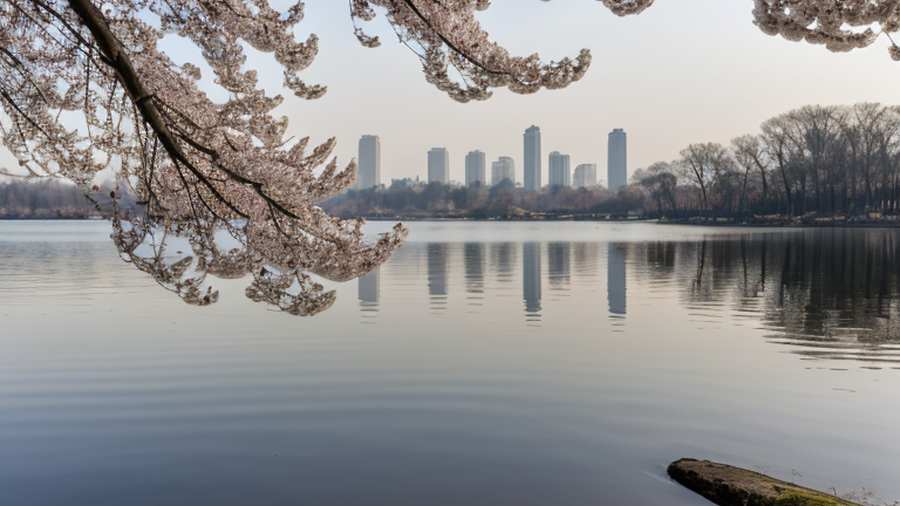
- Gucun Park's cherry belt, among the largest in the city, two weeks in bloom
- Zuibai Pond, a rare quiet among classical gardens
- Fangta Garden, pagoda and paifang rebuilt to a Song layout
Suggested itinerary
- Day 1D1 Baoshan river mouth and park, about 30 km
- Day 2D2 Baoshan Temple and the old drill ground, about 25 km
- Day 3D3 Three Songjiang gardens, about 50 km
- Day 4D4 Lingang seaside return, about 70 km
Day by day
The Baoshan river mouth
About 30 km today
Wusong Fort and Mudflat Park
Where the Huangpu meets the Yangtze, the water opens and the mouth was long defended by batteries on both banks. The park today threads ruins, wetland and embankment into one walk: gun-platform bases and a wall segment survive, with a small war-history display, and timber boardwalk and decks run the river. At low tide the Yangtze flat lays bare — mud, waders and the wakes of shipping far out, the park's signature sight. Twenty minutes on foot from the north gate to the river deck, shuttle if you prefer, and lots fill before mid-morning weekends. River wind takes hats, and the boards are slick in rain.
Gucun Park
South Baoshan, one of the city's biggest country parks, built around cherry and plum: cherries east, plums west, lake and meadow in between. The ring plus side paths run over twenty kilometres, with bikes for rent and shuttles if legs tire. Cherries hold from late March for about a fortnight, earlier in a warm winter, and weekend crowds require online booking; plum blossom in late February is far quieter. Several gates exist, but the Baoangong Road side holds the most space. Food points are thin, so carry water and something to eat.
- Where to eat
- Shanghai noodles and braised pork at noon, small-plate seafood near Wusong at night.
- Roads and driving
- Yixian elevated to Mudanjiang Road: sound surface, freight mixed with commuters.
- Where to stay
- Baoshan or the far bank of the river, shortening tomorrow.
Tips for the day
- The fort park means real walking, so good shoes
- The flat shows at low tide, mud smell included
- The south gate holds more spaces
Temple and drill ground
About 25 km today
Baoshan Temple
Founded in the Ming and rebuilt on its present site at Luodian, Baoshan Temple is the most discussed new temple in the city. Its main halls are joinery in red meranti hardwood after Song method — column, beam and bracket all exposed, not one nail, colours subdued and proportions close to surviving Song work. The plan marches up its axis: gate, heavenly kings, main hall, dharma hall and sutra storey, with bells, drums and flank courts beside. There are no touts for costly incense, and circulation is clear. Hours follow the day's notice, no photography in the halls, and cover shoulders and knees. Forecourt spaces fill at weekends with worshippers and photographers both.
The Old Drill Ground
South Baoshan's old parade ground, tied to modern military drill, is now city green: runway, camp wall and a few old buildings set inside a park people run and walk through. It is open in a way central Shanghai rarely is, sight lines pushing from the runway to the treeline and the skyline beyond. A loop path and several track-like structures survive with boards explaining their use. Park on the street outside; there is no ticket and no retail, and dusk is the busiest hour. Stay on formed paths, keep off the turf, and keep noise down in the surrounding flats.
- Where to eat
- Fish balls and medic-cake soup at Luodian, soup dumplings back in town.
- Roads and driving
- Hutai and Chenxing avenues, many junctions, limits stepping often.
- Where to stay
- Second Baoshan night; moving south tomorrow afternoon is easier.
Tips for the day
- No cameras in the halls
- The old ground reads from outside its wall
- Luodian's lanes are tight, park off-site
Three gardens in Songjiang
About 50 km today
Thames Town
South-west of Songjiang new town, Thames Town is a low-rise district laid out like an English market town — red brick, steep roofs, chimneys and setts, a church and square at the centre, housing, bookshops, cafés and a second-hand shop around it. No ticket, no gate; people come to photograph, take tea or find a book, weekdays being quiet and weekend afternoons dense. It walks easily, with underground or kerbside parking, and modest if mid-priced kitchens. The buildings are new but detailed with care, and the church's open hours vary. Best taken slowly as a whole afternoon.
Zuibai Pond Garden
In the old town, Zuibai Pond is the city's most intact classical garden, descending from a Song estate, changing hands through Ming and Qing, its name drawn from Ouyang Xiu's tipsy-by-the-stream mood. A pond holds the centre, ringed by halls, crooked corridors, rockwork and old trees, several ginkgoes and Ming carved balustrade slabs the prizes. Visitors stay few, so water and birds carry the sound — the quietest garden within reach of downtown. Enter at the south gate, past the Lotus Hall and the Grass House on the Water to the west corridor, one loop an hour. Steps are many and sills high; mind your feet. Kerbside spaces inside the wall are easiest before ten.
Fangta Garden
East of the town, Fangta Garden holds a square nine-storey Song brick pagoda over forty metres, the oldest standing building here, in a plan by Chen Congzhou that brought a Ming spirit wall and a Qing flower hall onto the ground beside it, so the walk reads as a sequence of periods. Lawn, camphor and water, low building density, made for slow going. The tower does not open to climbing, but its shadow and the wall's brick carving repay attention. Entry is free or nominal per the day's notice, ginkgo yellow being the best week. Park outside the gate, where the bus stop also sits, and respect the marked no-tent zones.
- Where to eat
- Perch and bamboo in the old town at noon, Western food in Thames town at night.
- Roads and driving
- Hujiamin and Songwei links, fast until the old town, where lanes pinch.
- Where to stay
- Songjiang new town, handy for both tomorrow's coast and the return.
Tips for the day
- Old gardens hold short, steep steps
- Two of the three sit within walking range
- Wide lenses work; do not lean past rails
Seawall day at Lingang
About 70 km today
The Lingang Seawall and Salt Marsh
Lingang sits on the north shore of Hangzhou Bay south-west of the river, where a storm wall separates city from sea: its crest is a promenade, new blocks and lake parks to one side, mudflat and reed marsh to the other. Outgoing tide spreads the flat for half a kilometre, fiddler crabs and mudskippers working it; incoming leaves only a waterline. Wind off the bay runs two or three degrees under town, so hats and umbrellas get tested, and decks and shelters break the long walk. Parking is kerbside along the wall, weekends quiet, with no real food — bring water. In the last hour the light comes across the water and cleanly separates new façades from marsh.
- Where to eat
- Seafood noodles and yellow croaker at Lingang, home cooking back in the city.
- Roads and driving
- Hulu expressway to Haigang avenue: broad, light, crosswind and cameras.
- Where to stay
- Same-day back to the city, no hotel; watch the airport approach before hand-back.
Tips for the day
- Hard wind on the wall, leave the drone
- Do not step onto the flat
- Beat the rush home
Pages that help on this route
- Rental packages and what is included
- Temporary driving permit in China
- All routes by province
- All cars in the fleet
Costs to expect
Included: vehicle use, basic insurance, pick-up and drop-off. Not included: tickets, meals, hotels, fuel and tolls. Gardens take small fees; peak-hour bans apply to non-local plates, while a locally plated rental is unaffected.
Driving tips
- Never stop on ramps or in tunnels; a missed exit means a loop
- Old streets run one-way with heavy left-turn bans, follow the navigation
- Park lots fill by ten at weekends
- Take a locally plated car on a first Shanghai drive