Route overview
A rental car for foreigners makes this straightforward: Out of Hohhot to the wind farm and Huitengxile grassland, then across to Xilamuren for a night in a yurt, a slow day in place, and back to the city. Open steppe roads, few turns, long sight lines, and the main hazards are livestock and sudden storms.
Highlights
- Wind turbine field
- Huitengxile grassland
- Huanghuagou valley
- Honggeer obo
- Xilamuren grassland
- Puhui temple
Suggested itinerary
- Day 1D1 Hohhot to Huitengxile Huanghuagou, about 130 km (wind farm, grassland)
- Day 2D2 Huitengxile to Xilamuren, about 200 km (Honggeer obo, grassland, Puhui temple)
- Day 3D3 Xilamuren in place, 0 km
- Day 4D4 Xilamuren back to Hohhot, about 90 km
Day by day
Day 1 Hohhot to Huitengxile
About 130 km, climbing north
Wind turbine field
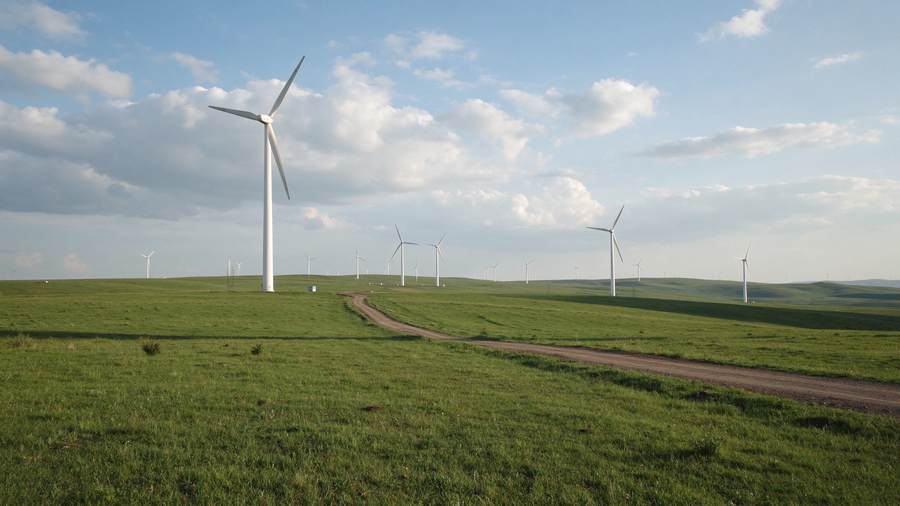
North of Zhuozishan the grassland fills with turbines, a road running through them and blades turning overhead. This is the wind base of central Inner Mongolia, hundreds of machines to the horizon over rolling grass, and for many people the first grassland photograph they take. There are lay-bys to stop in; keep off the grass, it is pasture and compressing it costs the herder money. Loud under the towers. Best as silhouettes towards sunset, hard light at noon.
Huitengxile grassland
Huitengxile means cold ridge in Mongolian, around 2,100 metres, the high meadow country of central Inner Mongolia, grass to mid-calf in summer and wildflowers in layers. Grey volcanic boulders sit scattered across it, heaped as if by hand, the signature of this ground. The open grazing outside the scenic area is free to walk, the ticketed part is not. Grass peaks in July and August, yellows from mid September. Strong sun, wind, secure the tent.
Huanghuagou valley
Huanghuagou is a cut in the Huitengxile plateau with a stream on the floor, volcanic rock and grass slopes, yellow flowers in summer, which is the name. Boardwalk and shuttle inside, two hours on foot for the loop, quicker by cart with less seen. Warmer and calmer down in the valley, good for a picnic. Ticket and shuttle separate, park at the mouth. Muddy after rain, waterproof shoes. Late light on the rock strata is the hour to be there.
- Where to eat
- Boiled mutton and roast leg are the staples, half a sheep feeds a table, with milk tea and roasted millet; eat at a herder camp rather than the scenic restaurant, 80 to 120 a head.
- Roads and driving
- In a rental car for foreigners, out of Hohhot on the 110 or the expressway to Zhuozhi, then county roads north; the last stretch is grass and gravel, fine for a normal car if slow, slippery after rain. No lighting, reach camp before dark.
- Where to stay
- Yurt camps near Huanghuagou, 300 to 600 with dinner and breakfast; or the county town hotels at around 200 if you want a proper bathroom.
Tips for the day
- Cold nights even in summer, thick quilts
- Camp power is unstable, bring a power bank
- Do not chase the flocks for photos
Day 2 Huitengxile to Xilamuren
About 200 km across steppe and farmland
Honggeer obo
Honggeer obo is a stone cairn on the edge of Xilamuren, where Mongolians give thanks to heaven, stones piled in a ring with prayer flags and willow branches on top. The festival around the thirteenth of the fifth lunar month is the big occasion, with horse racing and wrestling. Otherwise you walk three times clockwise, add a stone, make a wish. It stands on a rise, park below and walk up five minutes, no shelter and plenty of wind.
Xilamuren grassland
Xilamuren is the grassland closest to Hohhot, developed early, camps everywhere, with riding, karts and archery on offer. The grass is shorter than Huitengxile but the ground is flat and open, easy with children. Use a proper riding outfit, agree price and route, do not chase bargains. Evening brings bonfires and song and dance, lively and commercial. The hour worth keeping is early morning: dew, flocks leaving the pen, the camp still asleep.
Puhui temple
Puhui is a Qing Qianlong era Tibetan Buddhist monastery on the grassland, called Zhaohe temple locally, small, one main hall and a few side halls. It was the religious centre of the steppe and herders came in for its festivals. Incense is light now and the place is quiet, the murals and thangkas only average, and what you come for is the oddity of a Han-Tibetan building standing alone in grass. Cheap ticket, hat off inside, walk clockwise.
- Where to eat
- Camp dinners are usually whole roast sheep or boiled mutton with milk tea, charged per head; town noodle shops do lamb noodles and offal soup for twenty, cheaper than the camp.
- Roads and driving
- In a rental car for foreigners, county roads between the two grasslands, crossing farmland and steppe, surface uneven in places, watch for potholes. No markings on the grass sections, slow for oncoming cars. Stop for livestock, no horn.
- Where to stay
- Yurt camps at Xilamuren, 300 to 600 with meals and bonfire; the Zhaohe town guesthouses at about 200 if you want quiet and warmth.
Tips for the day
- Check the riding outfit carries insurance and agree the duration
- Signal is weak, stay together
- Nights are cold, the camp quilts may not be enough
Day 3 A day on the grass
No driving, activities around the camp
Grassland morning
The best hour is around sunrise, light from five, dew on the grass, flocks driven out, camp still quiet. Walk then: wind through grass, an eagle overhead now and then. Backlit grass heads photograph best. By nine the tour buses arrive and the grass becomes a fairground. One hour earlier is worth the lost sleep.
- Where to eat
- Boiled mutton at the camp for lunch, or a pot of lamb noodles; milk tea with milk tofu and milk skin in the afternoon, salty, an acquired taste.
- Roads and driving
- No driving today; walk or ride. For supplies, Zhaohe town is twenty kilometres round trip on dirt road.
- Where to stay
- Same camp, no move.
Tips for the day
- Near zero before sunrise, thick coat
- Do not walk far alone, easy to lose direction
- Carry your rubbish out, nobody collects it
Day 4 Xilamuren back to Hohhot
About 90 km
Zhaohe town
Zhaohe is the small town on the edge of the grass where everything practical is: fuel, shops, a repair bay, a clinic. Fill up and buy water before the city run. A few dairies sell milk tofu, milk skin and mare milk wine, cheaper than the camps. One main street, ten minutes end to end, but it has what you need.
- Where to eat
- Oat noodles at Wuchuan on the way, or shaomai with brick tea in Hohhot, eight to a steamer, the local breakfast.
- Roads and driving
- County road to the national road, ninety kilometres in an hour and a half; roadworks on the city approach, follow the diversion signs.
- Where to stay
- Back to the city today. One more night in Hohhot puts Dazhao and the old street on tomorrow.
Tips for the day
- Fuel in town is cheaper than in the city
- Buy vacuum packed dairy, loose packs spoil
- Avoid the evening peak into town
Costs to expect
Fuel, tolls, grassland entry and yurt lodging are settled on the spot; the rental car is booked separately, no package price is quoted.
Driving tips
- Fill up before leaving the city, stations thin out past the wind farm
- Afternoon thunderstorms arrive fast in July and August
- Watch for sheep and horses on the road, especially at dusk