Route overview
Pick up in Harbin, drive northwest to Wudalianchi for volcanic cones, lava fields and the warm pond, then cross the Lesser Khingan to Tangwanghe in Yichun for stone forest and gorge, and spend a slow third day among original pine forest and the deer park before the forest road back to Harbin. On a Rental Car for Foreigners in China the route has more long driving days; woodland roads are straight but fuel stations are spaced out, suiting summer visitors who want volcanoes and forest away from the heat.
Highlights
- Laoheishan crater and lava rock sea on a northern Rental Car for Foreigners in China route
- Wenbo pond, lava and moss water system
- Tangwanghe granite stone forest under pines
- Wuying original pine forest and boardwalks
Suggested itinerary
- Day 1D1 Pick up in Harbin, Wudalianchi — 390 km
- Day 2D2 Wudalianchi to Tangwanghe, Yichun — 400 km
- Day 3D3 Stay in Yichun, forest and deer park at leisure — 0 km
- Day 4D4 Yichun back to Harbin — 350 km
Day by day
Day 1 West from Harbin to Wudalianchi volcanic landforms
About 390 km today
Laoheishan Black Dragon Mountain
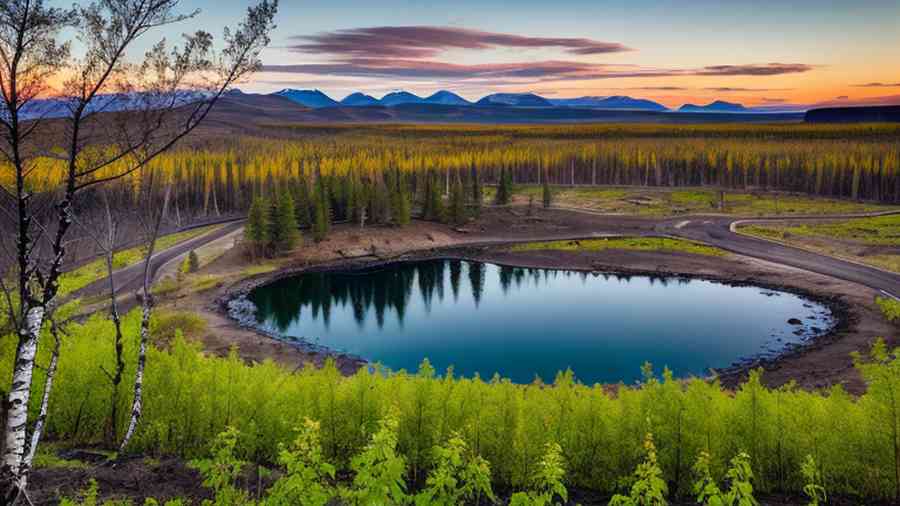
Laoheishan, also called Black Dragon Mountain, stands in the western Wudalianchi reserve as a cone and lava terrace where crater, vent and broken lava sea survive intact, the representative volcanic landform here. The crater forms a funnel; the rim trail circles it to show inner slopes and rock colour, while below the lava sea spreads black fragments over the ground with sparse moss and grass in the gaps, a rough open scene. Beyond the hill the connected lakes and farm plain come into view. Walk the crater rim circuit, then descend through the lava-sea trail over two to three hours. Park at the scenic lot and take the internal shuttle to the foot. Rim steps climb and require moderate effort, with pauses; the rock sea is uneven, wear high grip shoes, avoid unsafe lava cracks, and do not take lava stones away.
Wenbo Warm Pond
Wenbo lies by the Shilong River north of Wudalianchi, a warm water system among lava rock made of linked pools fed by mineral springs; the water stays above freezing in winter and keeps its temperature through the year. Lava terraces beside the pools carry moss and dwarf pines, water colour shifting with depth, morning vapour sitting on the surface in a quiet scene. Unlike the rugged cones, the appeal here is detail of water, vegetation and lava texture. Walk the boardwalk around the pools to read marshes, moss and bank rock for about an hour. Park at the scenic lot and walk to the boardwalk entrance. The boardwalk is level with raised sections and railings, no high steps; the shore is damp, watch plank gaps, use repellent where insects gather, add a light jacket on summer mornings and evenings, and do not leave litter on the walkway.
- Where to eat
- On this Rental Car for Foreigners in China route, keep lunch simple in a county town along the way; in Wudalianchi try mineral-spring fish, spring tofu and northeast stews, town eateries working with local ingredients and plain flavours.
- Roads and driving
- Leave Harbin northwest on the Heha and Henen roads through plain and farmland, smooth and straight with a few provincial-road bends. On this long first day of a Rental Car for Foreigners in China trip, download an offline map before leaving; internal roads link the Wudalianchi sights with clear signs, and watch farm machinery on the road in summer.
- Where to stay
- Stay in Wudalianchi town or a hotel near the scenic area, close to the forest route next morning.
Tips for the day
- Lava rock edges are sharp, do not climb rails onto the rock sea
- Strong sun at the site, bring hat and water
- Town fuel stations close early, refuel before evening
Day 2 Across the Lesser Khingan to Tangwanghe stone forest and Maolangou
About 400 km today
Tangwanghe Forest Stone Scenic Area
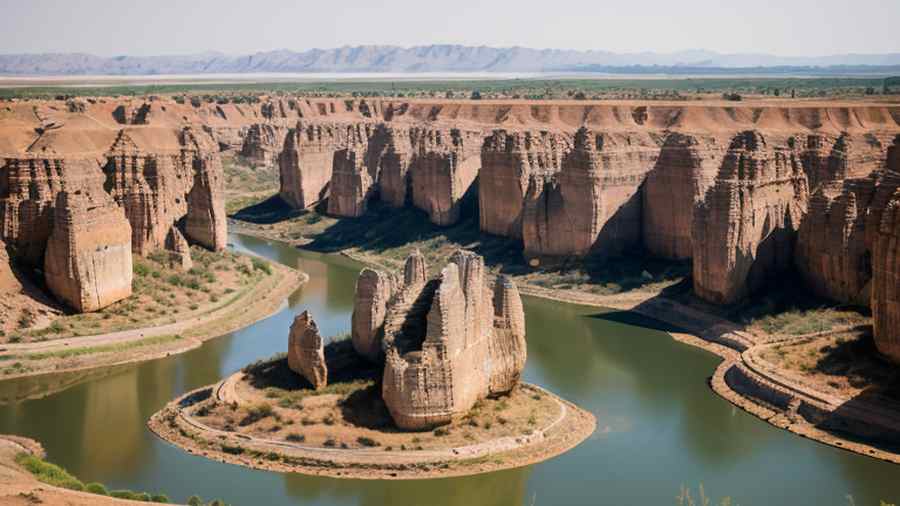
The Tangwanghe Forest Stone Area sits in the Lesser Khingan heartland at Tangwang county, Yichun, where weathering and glacial action left granite pillars among red pine and birch, stone alternating with forest. Peaks rise at different heights, some columns, some linked walls, streams threading the woods past the rocks. It combines geology with a forest walk, dense shade in summer and mixed conifer-broadleaf colour in autumn. Follow the main loop boardwalk through pillars and trees for two to three hours, viewpoints over rock peaks and canopy. Park at the visitor centre and walk in. Boardwalks rise and fall on steps; the woods are cool and damp, wear grip shoes, and do not climb between rocks, stay on the trail. As the core forest stop on this northern Rental Car for Foreigners in China route, half a day feels relaxed, with no smoking or open flame in the woods.
Maolangou Gorge
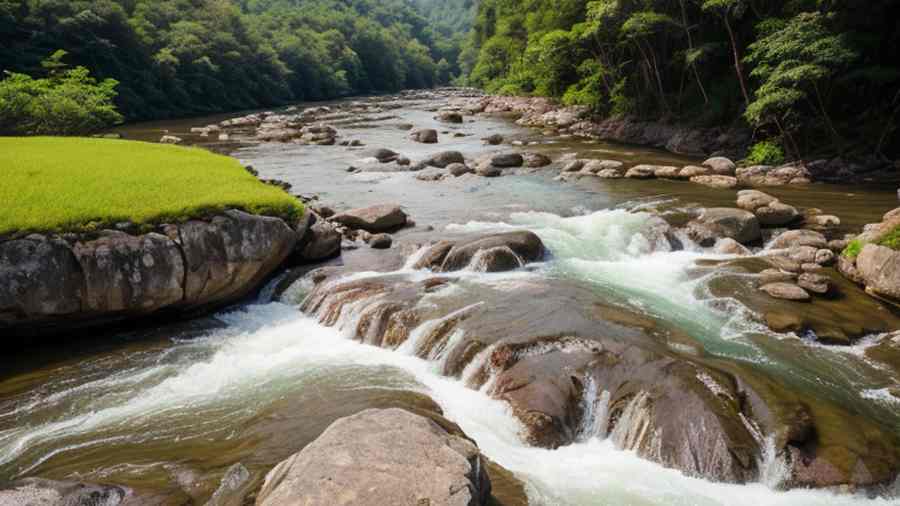
Maolangou lies in the hills southwest of Jiayin county, Yichun, a wooded gorge where a stream drops through rock fissures into several falls and deep pools between steep shaded walls. Granite and sedimentary rock alternate under broadleaf trees and shrubs; in summer the flow is full, the trail running along the water past pools and cascades. Popular speech calls it a northern Jiuzhaigou, but the landscape is primarily a northeast forest gorge, so read the onsite conditions rather than the nickname. Follow the stream-bottom trail up and back over about two hours. Park at the gorge mouth and walk in. Steps run through the gully; hold rails on wet sections, older visitors and children go slowly. After rain watch for rock fall and rising water, follow the site opening advice, bring repellent, and do not tread on streamside moss.
- Where to eat
- Porridge and noodles for breakfast in Wudalianchi; lunch at a forestry-town eatery toward Yichun on woodland stews, mushrooms and staples; dinner at a Tangwanghe guesthouse on wild greens and river fish, with generous portions.
- Roads and driving
- Leave Wudalianchi east across the Lesser Khingan via Yiqi and Heha expressways and woodland roads under continuous forest; the road runs straight with stretches through forest farms and villages. Mobile signal is patchy in the woods, download an offline map before leaving, fill fuel in the county town, and slow early at junctions.
- Where to stay
- Stay at a Tangwanghe forest guesthouse or hotel, within easy reach of the stone forest in the morning.
Tips for the day
- Many junctions in the forest, slow early
- Stone-forest boardwalks stay cool, long sleeves against insects
- Maolangou floor is slippery, go carefully in rain
Day 3 Stay in Yichun, original pine forest and deer park
No long drive today; local hops of about 5 to 15 km
Wuying National Forest Park
Wuying National Forest Park sits on the southern Lesser Khingan slope north of Wuying district, Yichun, a protected original red pine forest with tall, close stands, moist air and needle litter on the ground. Inside, the Songxiang bridge, Guantao tower and boardwalks run under the canopy past trunks, undergrowth and streams. Cool in summer for a shaded walk, while autumn mixes pine green with broadleaf gold in clear layers. More than woods, it is a window on Lesser Khingan forest ecology, panels explaining pine growth and conservation. Enter and follow the Songxiang bridge and Guantao tower loop over two hours. Park at the lot. Boardwalks are level; the tower has a spiral stair, so less mobile visitors can stay on the flat forest sections. Insects are many, bring long sleeves and repellent, and do not break branches on the trail.
Jinshan Deer Park
Jinshan Deer Park sits in the woods at Jinshantun, Yichun, a semi-free-range deer enclosure where herds move across grassy slopes and fenced woodland merged with the forest. The open meadow rings with trees; deer graze or rest in shade, observed at close range in natural posture. Beyond the animals, the reserve keeps woodland slopes and a stream gully for walking and photographs, especially interactive for families. Feed comes from the park; do not bring food and do not disturb the herd. Walk the fence path in a loop and stop by the meadow for about an hour. Park at the enclosure lot. Ground is grass slope and dirt, level with no high steps; summer meadow insects call for closed shoes, move slowly near deer, follow keeper guidance, and do not chase the herd.
- Where to eat
- Breakfast in the forest town on coarse maize porridge, buns and pickles; main meals on forestry pork ribs, stir-fried wild greens and wood ear mushrooms, light and filling, and guesthouses take dinner bookings ahead.
- Roads and driving
- No long drive today; county and forestry roads link sights on short hops, smooth but with many junctions and turns, follow navigation and scenic signs. Mist can rise in the woods after midday, keep speed down, and watch slow farm vehicles on country roads.
- Where to stay
- Keep the Tangwanghe or Yichun woodland hotel, no need to change before returning to Harbin next day.
Tips for the day
- No fire or smoking in the original forest
- Use park feed for deer, do not bring your own
- Watch loose board gaps on the forest walkways
Day 4 Woodland return, Yichun plain back to Harbin
About 350 km today
Yichun Wood Carving Garden
The Yichun Wood Carving Garden lies by the river in town, a garden themed on local timber carving with large sculptures drawn from forest life, animals and logging history. Ground is level around water and trees, works placed along main and side paths to show carving technique and the past of Lesser Khingan timber harvest and replanting. Panels introduce wood types and carving steps, easing the transition from nature sights to an urban rest stop. Walk main path and side loops for about an hour without long hiking. Park at the garden lot. Paths are level with a few small bridges and steps, easy on the body; shade keeps afternoons comfortable, sculptures must not be climbed or touched, and benches allow a rest.
Tieli farmland and woodland stop
Tieli sits on the southern edge of Yichun at the Lesser Khingan transition to plain, farmland and planted forest alternating along the road, villages scattered between; in harvest season rice waves meet tree belts, the view opening from hills to flatland. This is not a ticketed spot but a roadside observation point on the return, showing northeast reclaimed farmland, farm houses and shelter belts. Stop for about twenty minutes at a wide pull-off or viewing point to photograph and stretch, without lingering in the lane. Park on wide road shoulders or a village lot, clear of country-road junctions. The stop ground is a level short slope with no steps; farm machinery enters the road at any time, watch traffic when opening doors, keep the brief stay in strong summer sun and carry water, and do not trample crops at the field edge.
- Where to eat
- Porridge and staples for breakfast in the forest town; lunch on northeast home cooking and noodles at a Tieli or Suihua county town; a proper meal after reaching Harbin, and county eateries serve quickly.
- Roads and driving
- Leave Yichun south on the Heha expressway via Tieli and Suihua back to Harbin; woodland roads open into plain, straight and light on traffic. Watch afternoon fatigue, rest once at a service area, check the drop-off point and time before entering the city, and hold the wheel steady in plain crosswind.
- Where to stay
- No overnight stay is arranged; if you want an extra night, stay in central Harbin for Zhongyang Street and the Songhua bank the next day.
Tips for the day
- Fill up at the forest county before the return
- Crosswind on the plain, hold the wheel steadily
- Clear personal items and check fuel before drop-off
Pages that help on this route
- Rental packages and what is included
- Temporary driving permit in China
- All routes by province
- A car that suits this route: Volkswagen Tiguan L (Mid-size SUV)
Costs to expect
Included: vehicle use, basic insurance, pick-up and drop-off. Not included: tickets, meals, hotels, fuel and tolls.
Driving tips
- On this Rental Car for Foreigners in China woodland drive, watch junctions and farm vehicles crossing
- Summer days are long but fuel stations are spaced out, refill below half a tank
- Insects are many in the forest, bring repellent and long sleeves
- Keep passport and temporary driving permit on you overnight