Route overview
Five days from Hefei: first the lakeside temple at Zhongmiao on Chaohu, then a boat to Laoshan island in the middle of the lake. West into southern Anhui, where the old Dengfeng bridge over the Heng river is the start of the climb up Qiyun Mountain and the Yuehua street hangs under its cliff. Then Yixian, with the archway of Xidi and the autumn colour of Tachuan close by, finishing among the water lanes and moon pond of Hongcun. Hefei to Qiyun is three hundred and thirty kilometres of motorway and bending hill road, and the lanes between villages are narrow. This is a Rental Car for Foreigners in China route of lake, mountain and white-walled village.
Highlights
- Rental Car for Foreigners in China: the red walls of Zhongmiao sit right on Chaohu, steps running down to the water
- A short boat ride to Laoshan island, its seven-storey pagoda on the summit looking over the whole lake
- Yuehua street on Qiyun Mountain clings under the cliff, temples and houses packed into one lane
- Tachuan's tallow trees turn red in autumn, mist rising off the terraces
Suggested itinerary
- Day 1Hefei to Zhongmiao on Chaohu, about 55 km
- Day 2Zhongmiao to Qiyun Mountain in Xiuning, about 330 km
- Day 3A day around Qiyun Mountain, about 30 km
- Day 4Qiyun to Xidi in Yixian, about 90 km
- Day 5Yixian back to Hefei, about 330 km
Day by day
Hefei to Zhongmiao on Chaohu
About 55 km, 1h10
Zhongmiao Temple
Zhongmiao temple stands on the north shore of Chaohu with its gate almost over the water, first built in the Three Kingdoms period and rebuilt in the late Qing, red walls and yellow tiles running along the shore. Incense to the lake goddess has never stopped, and the stone steps in front drop straight to the landing where fishing boats and tour boats tie up. Look at the timber frame of the main hall, the old locust trees behind and the sunset over the lake; a small lane sells incense and lake fish. Park in the public car park at the town entrance, five minutes on foot, and the temple itself has few steps. The landing behind the temple fills with fishing boats towards evening, and the fish market sets up on the bank.
Laoshan Island
Laoshan sits in the middle of Chaohu, less than a square kilometre, with one village and one pagoda. The seven-storey Wenfeng pagoda was funded by local gentry in the late Qing, and from the top the whole lake opens out. Boats leave the Zhongmiao landing and take about twenty minutes, schedules shifting with the wind, so confirm the return sailing before boarding. Besides the pagoda there is a fishing village on the south side, reeds on the flats and a loop path of about two hours with gentle climbs; the stair inside the pagoda is narrow, one person at a time. No cars on the island, leave yours at the Zhongmiao car park. There is one small shop on the island, so bring water and snacks and take your rubbish away.
- Where to eat
- Steamed whitebait and lake shrimp, small seafood kitchens in Zhongmiao town
- Roads and driving
- Mainly the lakeside avenue, narrow at the town entrance
- Where to stay
- One night in a lakeside guesthouse at Zhongmiao
Tips for the day
- Steps in front of the temple are slippery when wet
- Ask the boat office about the last sailing to the island
- Dinner is early in this quiet town
Zhongmiao to Qiyun Mountain
About 330 km, 4h
Heng River
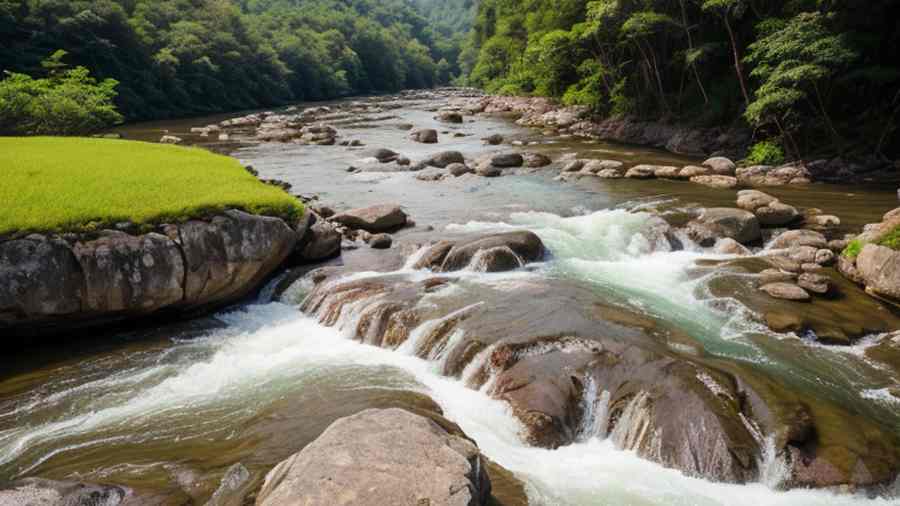
The Heng river, a tributary of the upper Xin'an, runs past the north foot of Qiyun Mountain, narrow and clear, with a line of old camphor trees on the bank. In Ming and Qing times pilgrims landed here from boats and climbed by the old path, and the stone steps and landing remain. Reflections on the water, the old ferry point and the hills behind are the draw, and the surface lights up when the sun slants in late afternoon. The riverside path is level, half an hour is enough, and you park at the north gate of the mountain, five minutes on foot. A bamboo grove on the far bank can be reached along a narrow field path, and the stone tablet by the landing records bridge repairs in the Qing.
Dengfeng Bridge
Dengfeng bridge west of Xiuning town crosses the Heng river on nine stone arches, first built in the Ming Wanli years and rebuilt in the Qing, its paving worn into shallow ruts by cart wheels, balustrades and stone inscriptions still at the ends. It is the start of the old climb to Qiyun, where pilgrims crossed and went up the steps. From the bridge the whole cliff face of the mountain is in view, with bamboo rafts and gravel bars below. The car park at the bridge head is small, so arrive early in season; the approach is a gentle slope. Old camphor trees at the bridge head shade a small tea stall, and the gravel bar two hundred metres downstream is used for washing and rafts in summer.
Qiyun Mountain
Qiyun Mountain, fifteen kilometres west of Xiuning, is one of the four Daoist mountains of China alongside Wudang, Longhu and Qingcheng, with a shrine founded in the Tang and heavy pilgrimage in the Ming. The Taizu and Yuxu halls and the Zhenxian caves spread along the cliff, with hundreds of carved inscriptions. Yuehua street is the heart, one lane hanging under the rock with temples and houses squeezed together and Xianglu peak overhead; when cloud fills the valley the street floats. The cableway base has a car park beside it, and the walk up takes about two hours on steep, crowded steps. A shuttle runs from the gate to the cableway base and leaves when full; guesthouses on the mountain are few, so book ahead.
- Where to eat
- Lunch on the road at Wuhu or Xuancheng, hairy tofu and cured pork hotpot in Xiuning
- Roads and driving
- Motorway most of the way, bending hill road after Xiuning
- Where to stay
- One night in a guesthouse below Qiyun Mountain
Tips for the day
- Start early on the long day and rest at a service area
- Slow down on the bends in rain
- Check the hot water in the hillside guesthouses
A slow day on Qiyun Mountain
About 30 km around the mountain
Yuehua Street and the Immortal Caves
Yuehua street runs along the middle of Qiyun, houses built against the cliff, halls, shops and homes mixed together on flagstones worn shiny. Below it the Zhenxian caves sit in a row in the red sandstone, shrines inside and a view over the fields from the mouth. Look also at the brackets of the Taizu hall, inscriptions on the rock and the Xianglu peak viewpoint at the end of the lane. Park at the cableway base and walk from the top station; the street undoes and redoes itself in steps, two hours to cover it. A few guesthouses on the street serve simple noodles and bamboo shoot soup, and the steps outside the caves are worn hollow by pilgrims.
Morning mist on the Heng River
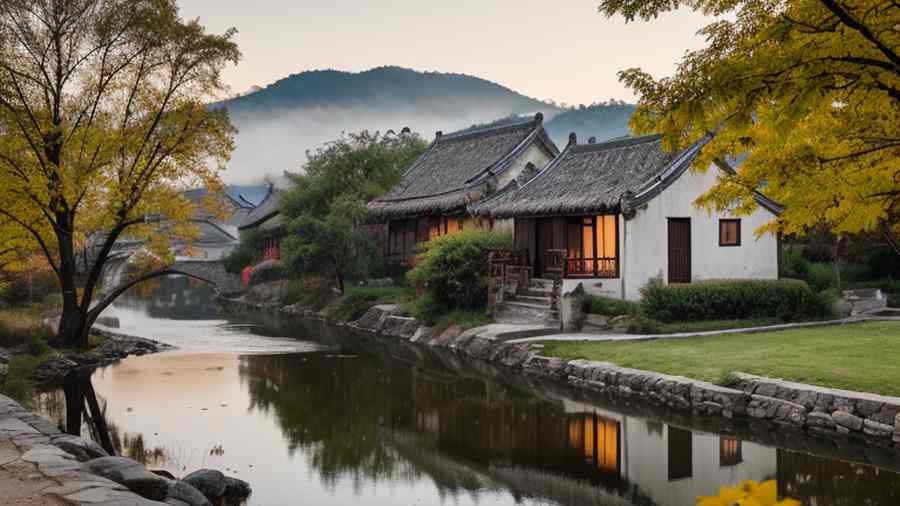
Early morning on the Heng river is the quiet hour of this trip, mist on the surface, camphor shadows long on the bank and the cliff of Qiyun reduced to an outline. Stone landings at the water are still used for washing and drawing water, bamboo rafts tied on the far side. Mist, reflections and the shape of the mountain are the subject, and a longer lens stacks the layers better. Park at the north gate, five minutes to the water, level path, an hour out and back. The mist lifts slowly and light comes through after eight; there is parking under the old camphors by the bank.
- Where to eat
- Temple vegetarian meals, Xiuning sesame cakes and hill vegetables
- Roads and driving
- Short local roads, many bends, unlit at night
- Where to stay
- A second night at the foot of the mountain
Tips for the day
- Weather changes fast up here, bring a light shell
- Keep your voice down in the halls and ask before photos
- Note the last cableway down when you go up
Qiyun to Xidi in Yixian
About 90 km, 2h
Xidi Village
Xidi, eight kilometres south-east of Yixian town, was settled by the Hu family in the Northern Song and keeps over a hundred and twenty Ming and Qing houses, with the stone archway of Hu Wenguang at the entrance and World Heritage status since 2000. Carvings on the archway, the timber of Lüfu hall and the rails of the Zouma gallery are the details; lanes are narrow and straight between white walls and dark tiles. The car park is outside the village, the lanes inside are level flagstone, and two hours covers it without much climbing. A platform outside the village shows the whole roofline, and the water channels laid in the Ming are still running.
Tachuan
Tachuan is a hamlet in a fold of the hills two kilometres north-east of Hongcun, a few dozen households on the slope with tallow trees around the houses, leaves turning red and yellow in autumn down to the valley floor. A few old houses remain, a stream runs through and the stone bridges are narrow. Autumn colour and morning mist are the reason to come, the roadside viewpoint looks over the whole slope and the colour warms an hour after sunrise. Park on the verge off the county road and walk a few minutes up. Farm kitchens in the hamlet serve bamboo shoots and chicken, and the slope below the viewpoint is yellow with rapeseed in spring.
- Where to eat
- Yixian dried tofu, fermented mandarin fish and farm chicken
- Roads and driving
- County roads, narrow and bending at the villages
- Where to stay
- One night in a guesthouse outside Xidi or Hongcun
Tips for the day
- Use the village car park, cars stay outside
- Keep right in the narrow lanes of Xidi
- The Tachuan viewpoint is on a roadside slope, park off the lane
Hongcun, then back to Hefei
About 330 km, 4h
Hongcun
Hongcun, eleven kilometres north-east of Yixian town, was laid out by the Wang family in the Southern Song with water in the shape of a cow: channels through the lanes, the moon pond at the centre and the south lake at the entrance, World Heritage since 2000. Old Huizhou houses around the moon pond, the carvings of Chengzhi hall and the arched bridge over the south lake are the sights, and early morning gives a flat sheet of water and a complete reflection. Park at the entrance and walk in; the lanes are level, two hours covers it. Benches line the south lake at the village entrance, and the channels still carry water used for washing downstream at dawn.
South Lake Academy
The South Lake academy by the water was built in the Qing as the village school, a series of courtyards with a lecture hall, the Wenchang pavilion and a library, inscriptions still legible on the beams. Its gate faces the lake and from the steps the whole sheet of water and Leigang hill beyond are in view. Carved door hoods, old textbooks and copied examination papers are on show. It sits two minutes from the village car park and takes half an hour. A side door of the academy opens into a lane of small shops selling calligraphy and bamboo carving.
- Where to eat
- Hairy tofu and bamboo shoots with pork in Hongcun, dinner at Wuhu on the road
- Roads and driving
- Narrow county road out of the village, then open motorway
- Where to stay
- Back to Hefei the same day, no overnight
Tips for the day
- The moon pond is quiet and well lit early
- Start back after lunch rather than driving at night
- Keep the village car park ticket
Pages that help on this route
- Rental packages and what is included
- Temporary driving permit in China
- All routes by province
- All cars in the fleet
Costs to expect
Tickets for the temple, the island boat and the mountain cableway, village lodging, fuel and tolls make up most of it, food by the lake and in the hills is modest, quoted by the licensed agency.
Driving tips
- Wind off the lake is strong, carry a jacket for the evening
- Steps on Qiyun are steep, wear grippy shoes and slow down after rain
- Village lanes are narrow, leave the car in the outside car park
- Tachuan is busy in autumn, go up to the viewpoint early