Route overview
A three-day loop from Shijiazhuang, set up as a Rental Car for Foreigners in China: first the temples and pagodas of Zhengding old town, then east to Cangzhou for the iron lion and the Wuqiao acrobatics, returning past the Nandagang wetlands. About 450km on expressway and plain national roads, with no more than three hours of driving a day, it suits visitors drawn to old timber halls and folk performance.
Highlights
- See the Song dynasty Mani Hall and the reclining Guanyin at Longxing Temple
- Climb the Tang-era bell tower of Kaiyuan Temple in Zhengding
- Meet the thousand-year iron lion in Cangzhou
- Watch a folk acrobatics show at Wuqiao
Suggested itinerary
- Day 1D1 Shijiazhuang to Zhengding old town, 20km
- Day 2D2 Zhengding to Wuqiao in Cangzhou, 200km
- Day 3D3 Cangzhou and Nandagang wetlands back to Shijiazhuang, 230km
Day by day
D1 Shijiazhuang to Zhengding old town
Total driving today 20km
Longxing Temple
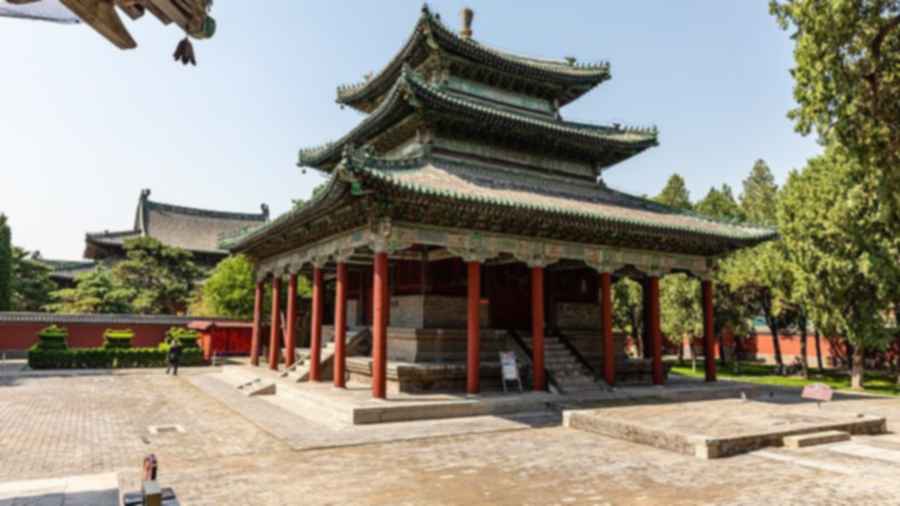
Longxing Temple on East Gate Street in Zhengding was founded in the Sui dynasty and keeps Song dynasty halls and sculpture unusually intact. The Mani Hall is original Song work, its reclining Guanyin praised by Liang Sicheng as a beauty of the East, and behind it stand a bronze thousand-hand Guanyin over twenty metres high and a revolving sutra hall whose wooden wheel still turns. The compound is sizeable: from the Heavenly King Hall to Pilu Pavilion takes about two hours, with the Mani Hall framing, the Guanyin and the Sui stele pavilion the priorities. A dedicated car park faces the gate, the approach is flat, floors are level brick with a few steps at the halls, and the dim interior rewards a slow pace; food stalls and souvenir shops line the street outside.
Kaiyuan Temple Bell Tower
Kaiyuan Temple inside Zhengding was founded under the Eastern Wei, and its bell tower keeps Tang dynasty structure, counted among the earliest surviving half-timber towers in China. Massive stone lions and deep column bases sit below, a bronze bell hangs above, and the rear of the compound retains the base of a Dharma-ship hall and Tang-style turtle-borne steles. The temple is compact, forty minutes covers it, and the tower's interlocking brackets and the carving of the lions are the points to study, with daylight slipping between the floorboards. Parking is on the street outside or in bays along the lanes; floors are level stone, the tower needs a few worn stone steps, and the handrail is worth using.
- Where to eat
- In Zhengding try Ma family chicken, cracked liver and buckwheat noodles; restaurants cluster near the south gate and a night market opens in the evening.
- Roads and driving
- From Shijiazhuang take Tiyu Avenue or National Road 107 to Zhengding, city road and highway throughout, with car parks around the old town edge.
- Where to stay
- No accommodation is booked; courtyard inns inside Zhengding or Shijiazhuang hotels both work.
Tips for the day
- Longxing is busy with tour groups, enter at 8:30 opening
- The bell tower steps are worn, careful in rain
- Old town parking is tight, head straight for the outer lots
D2 Zhengding to Wuqiao, Cangzhou
Total driving today 200km
Cangzhou Iron Lion
The Cangzhou iron lion stands beside the old city site, cast in the Later Zhou period of the Five Dynasties. Over five metres tall and more than thirty tonnes, it is the earliest and largest iron lion surviving in China, made to calm river floods, with inscriptions and repeated repairs visible on its body. Twenty minutes is enough: study the casting sections and base inscription, and the panels nearby explain how it was moved and conserved, including the supports added against corrosion. A car park faces the site, the approach is flat with a few low stone platforms, and the surrounding square is open enough for strollers and wheelchairs, with drink stalls at the edge. A row of panels to the west shows photographs of each move and repair, and guests usually give the lion half an hour before driving on to Wuqiao.
Wuqiao Acrobatics World
Wuqiao Acrobatics World in Wuqiao county is a folk park built around a craft the county is famous for: generations of village performers have lived by tightrope walking, bowl balancing and feats with iron balls. Several stages run shows all day, from high wire and horsemanship to folk magic, with old artists performing small ground-level acts between the big ones; two or three hours pass quickly, and the bowl-balancing and aerial hoop finales usually come in the afternoon. A large car park faces the main gate, the approach is flat, grounds are hard paving with a few steps at some stages, and crowds bunch at show times, so hold children close.
- Where to eat
- Cangzhou is known for hot-pot chicken and lamb sausage; Wuqiao town has donkey-meat flatbread and small stew restaurants in the evening.
- Roads and driving
- Beijing-Shanghai expressway then the Cangzhou ring; motorway most of the way, watch for fog patches and trucks, then provincial road to Wuqiao.
- Where to stay
- No accommodation is booked; Wuqiao town or central Cangzhou have hotels.
Tips for the day
- Show times at Acrobatics World are fixed, read the board at the gate
- The iron lion square is windy, hold onto hats
- Fog forms on the Hebei stretch at night, drive it in daylight
D3 Cangzhou and Nandagang wetland back to Shijiazhuang
Total driving today 230km
Nandagang Wetland
Nandagang Wetland in Huanghua, Cangzhou, is a coastal reed marsh on the west shore of the Bohai bay and a listed important wetland. Spring and autumn bring large numbers of migrants, channels cut the reeds into blocks, and towers and boardwalks push into the growth. Herons, egrets and geese dominate, best at dawn and dusk; in summer the reeds stand above head height and the boardwalk carries only wind and water sound, while the tower shows where several channels meet. Parking sits at the entrance, the approach and boardwalk are flat with no steps, but mosquitoes are fierce in summer, so bring repellent and allow two slow hours; a small exhibition explains the migration routes. Guests driving a Rental Car for Foreigners in China from Cangzhou often use it as the last stop before heading home.
Huanghua Port Seawall
The Huanghua port seawall runs along the west shore of the Bohai bay, with tidal flats and aquaculture outside it and salt pans and wind turbines inside. The crest road is drivable and at sunset the sea and the pans throw back light, one of the few open sea views in this district. The crest is narrow, slow for oncoming traffic, and a few gravel pull-offs let you step to the edge within a few paces, where flats show fishing boats and people gathering shellfish. The slope is stone and grass rather than steps; it is windy up there, so leave daylight for the drive back, carry water and food, and take your rubbish with you.
- Where to eat
- Huanghua crab and prawns are fattest in autumn, with seafood stalls around the port area.
- Roads and driving
- Shihuang expressway then the port link road, motorway plus seawall, with a low limit and crosswinds on the crest.
- Where to stay
- No accommodation is booked; drive back to Shijiazhuang and return the car.
Tips for the day
- No drones over the wetland, they disturb the birds
- The seawall is windy and unrailed, stay back from the edge
- The return is long, leave before sunset
Pages that help on this route
- Rental packages and what is included
- Temporary driving permit in China
- All routes by province
- All cars in the fleet
Costs to expect
Included: basic vehicle use and route guidance. Excluded: tickets, parking, fuel, meals, accommodation and personal spending.
Driving tips
- Some Zhengding lanes are closed to cars, use the outer car parks
- Wuqiao shows run to a fixed timetable, check times first
- Nandagang marsh has serious mosquitoes, long trousers and repellent
- Hebei expressways carry heavy trucks, return to the right lane after overtaking