Route overview
This trip picks up in Shijiazhuang, goes north toward Tangshan to see a Qing imperial tomb group and a reclaimed urban wetland park, then returns to the old town of Zhengding to view temples, ancient pagodas and old streets, over four days and roughly 760 km. Roads are mainly expressways and flat plain provincial highways with moderate gaps between towns and gentle going, suiting travellers after a Hebei history and old-town slow trip without heavy driving. A Rental Car for Foreigners in China on this central Hebei plain loop finds clear parking spots in county seats and the old town; spring and autumn are comfortable, and summer plain sun should be watched.
Highlights
- Statue avenues and memorial archways of the Eastern Qing Tombs in Zunhua
- Tangshan South Lake Park, an urban wetland reclaimed from a mining subsidence area
- Zhengding's temple-and-pagoda group: Longxing Temple, Linji Temple, Kaiyuan Temple and the Hua Pagoda
- A Rental Car for Foreigners in China exploring central Hebei's old towns, with pace and parking spots confirmed ahead
Suggested itinerary
- Day 1D1 Shijiazhuang to Tangshan (Eastern Qing Tombs, South Lake Park) — 350 km
- Day 2D2 Tangshan to Zhengding old town — 380 km
- Day 3D3 Zhengding stay, short shuttle to old-town temples and walls — 10 km
- Day 4D4 Zhengding back to Shijiazhuang — 20 km
Day by day
Day 1 North from Shijiazhuang to the Eastern Tombs and South Lake
About 350 km today
Eastern Qing Tombs
The Eastern Qing Tombs lie at the southern foot of Changrui Mountain west of Malanyu, Zunhua, one of the larger Qing imperial tomb complexes. Mausoleums are arranged along the foothill, with spirit paths, statue avenues, archways, halls and burial mounds in sequence, ringed by wooded hills. Several Qing emperors and empresses are buried here, and the system reads fully along the central axis; the stone archway, great red gate and statue avenue mark the entrance. Along the spirit path watch stone beasts and figures, enter archways and halls to understand the layout, and view mounds among pines. Park at the entrance lot and take the shuttle between mausoleums; visiting one tomb takes about forty minutes. Paths and courtyards are flat with few steps, though gates have thresholds. The complex spans wide with substantial walking, so wear comfortable shoes; elders can take two main mausoleums.
Tangshan South Lake Park
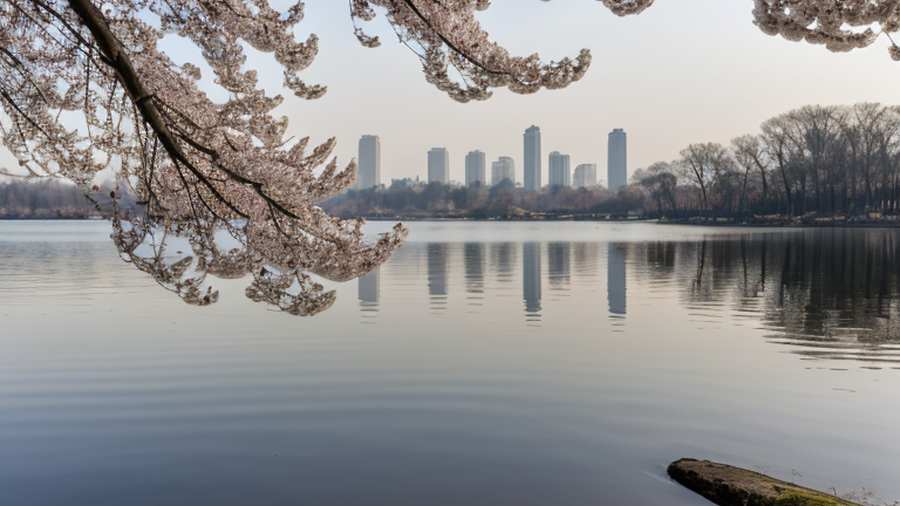
Tangshan South Lake Park sits south of the city, a large urban wetland developed on an old coal-mining subsidence area. Open water links lakeside green belts, with islets, reed banks and walking paths woven through, and city buildings visible across the water. The area once subsided and pooled water from mining; after backfilling, water treatment and planting, it became a green space for locals and visitors. Along the path watch water, reeds and waterbirds; viewpoints overlook the lake and skyline, and former industrial remains have become exhibition spaces. Park in public lots around the park, then walk the main ring or rent a bicycle; choose half or a full loop by energy. Paths are flat with a few boardwalk sections and few steps. Wind off the lake is strong, so bring a jacket; summer sun is strong, so wear a hat, and carry water as food points are scattered.
- Where to eat
- Dinner in Tangshan centres on chess-piece sesame buns, sweet fried dough and hele noodles; restaurants cluster near the department-store area, with solid noodle and meat dishes.
- Roads and driving
- Take the expressway north from Shijiazhuang toward the Beijing-Harbin direction, leave at Zunhua and take the county road to the tomb area; plain stretches are flat and straight with heavy truck traffic. This common expressway-to-county-road leg for a Rental Car for Foreigners in China entering eastern Hebei has village roads joining near the tombs, so slow down and watch.
- Where to stay
- Stay in Tangshan city; hotels and restaurants are plentiful, and joining the expressway toward Zhengding next day is convenient.
Tips for the day
- The tomb group is large with short hops between mausoleums; confirm shuttle cart schedules before entering.
- Climbing the statue avenue figures is not allowed; step back off the path when taking photos.
- South Lake Park is wide; pick up a map at the entrance and choose a route by walking distance.
Day 2 West from Tangshan to Zhengding old town
About 380 km today
Rongguo Mansion
Rongguo Mansion stands inside Zhengding old town, a Ming-Qing style mansion rebuilt after descriptions in a classic novel. Courtyards open along a central axis and wings, with gate, main hall, side rooms and garden in sequence; furniture, screens and figure displays furnish the rooms, a site for understanding a large northern clan residence. The mansion became familiar through film and television adaptations, and plaques and couplets use the novel's names, with the route divided by residential and ceremonial functions. Through the gate study the gate, main hall and wing layout, view corridors and rockeries in the garden, and read boards on residence hierarchy. Park outside the old town and walk in; courtyards are mostly flat with a few thresholds and steps, one and a half to two hours. Indoor light is dim, so do not use flash. Elders walk the axis slowly; slabs are slippery in rain.
Longxing Temple
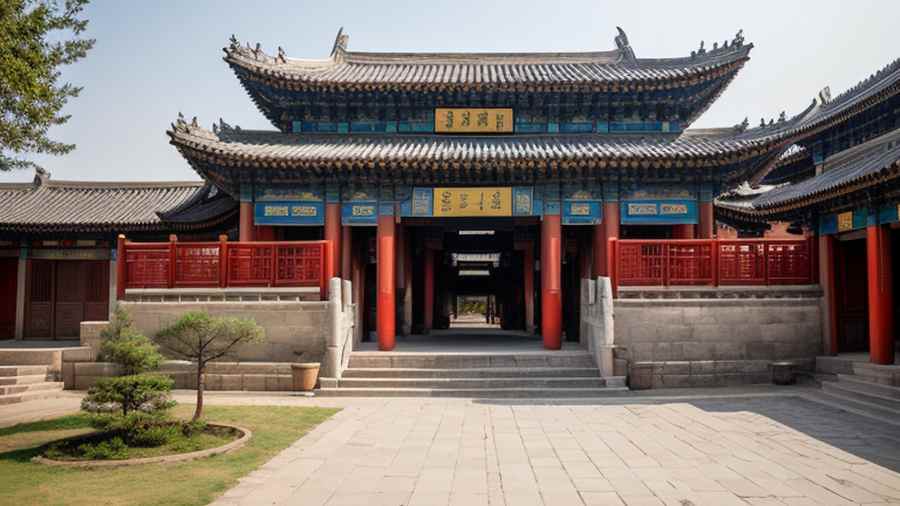
Longxing Temple stands inside the east gate of Zhengding old town, a long-established northern Buddhist monastery first built in the Sui and rebuilt through later ages. Surviving buildings along the axis include the Heavenly King Hall, Moni Hall, Wheel Storehouse Hall and Great Mercy Pavilion, among old cypresses and steles. The temple keeps Song-style members, a wooden revolving scripture cabinet and a tall bronze Buddha, an important site for monastery layout and ancient statuary. Along the axis study hall forms and brackets, view paintings and sculptures in Moni Hall, look up at the bronze Buddha in Great Mercy Pavilion, and inspect the wooden mechanism. Park outside and walk in; courtyards are mostly flat, though pavilion stairs are steep, so moderate visitors view from the ground floor. The full visit takes two to three hours. Keep quiet and do not touch statues; elders rest in courtyards without climbing.
- Where to eat
- Dinner in Zhengding features braised chicken, dried-beef slices and oven-baked sesame bread; restaurants cluster on the historic street, with savoury flavours. After a long day with a Rental Car for Foreigners in China, check in and drop luggage first, then walk the street for dinner.
- Roads and driving
- Take the expressway from Tangshan toward Shijiazhuang; plain stretches are flat and straight, traffic grows near the Shijiazhuang ring road, follow signs to the Zhengding exit, and watch restriction signs around the old town.
- Where to stay
- Stay in an inn inside or outside Zhengding old town; confirm parking with an inner-town guesthouse ahead, or use an outside lot and walk in.
Tips for the day
- Motor vehicles do not run inside old-town lanes; park in the outside public lot and walk in.
- Temple halls often have wooden floors; wear soft-soled shoes and keep voices low.
- Rest at the hotel for a while after the long drive before heading out, to avoid an exhausted old-town walk.
Day 3 Zhengding stay, temples, pagodas and the city wall
About 10 km today
Linji Temple
Linji Temple stands inside Zhengding old town, the ancestral monastery of the Linji school of Chan Buddhism. The compound is modest, with gate, main hall and Chengling Pagoda along the axis, quiet pines and cypresses, and steles recording lineage and restoration. The Linji school formed in the Tang and later spread to East Asia; the Chengling Pagoda is a brick multi-eaved tower with fine carving. As a quiet stop on a Rental Car for Foreigners in China visiting Zhengding, it draws fewer crowds than the large monastery, so you can read the pagoda courtyard and Chan arrangement quietly. Through the gate view the pagoda and its brick carvings. Park in the roadside lot outside and walk in; the compound is mostly flat with a circular path around the pagoda, about an hour. Steps are few; keep quiet and do not walk on grass around the pagoda.
Zhengding Old City Wall
Zhengding's old city wall rings the former old town; surviving sections are mainly Ming rammed-earth walls faced with brick, with gate towers, horse ramps and crenellations kept in sections. A moat and green belt run outside, and grey bricks show weathering from wind and rain. Zhengding was an important Hebei stronghold historically; the wall has been repaired repeatedly, and restored sections now form a walkway overlooking old-town roofs and distant pagodas. Enter through a gate, walk a stretch to view inner roofs, outer fields and pagoda shadows, and read boards on ramp structure. Park near the gate and walk up; the wall path is gentle with horse-ramp slopes, a round trip of one to two hours. The surface is even without steep steps; pushchairs use the gentle ramp. Elders can climb one section and return. The wall is exposed, so bring a hat and water; check closing time.
- Where to eat
- Lunch in the old town can be steamed pork buns, braised assorted platters and mixed-grain congee from long-standing street shops; afterwards rest at a tea house by the wall base.
- Roads and driving
- No long drive today; temples, pagodas and the wall are linked by short hops or walking inside the old town. Inner roads are smooth, and parking spots are scattered around each sight.
- Where to stay
- Keep the same Zhengding inn; leave luggage in the room and walk the town light.
Tips for the day
- Climbing inside old pagodas is usually not allowed; view from the base path and follow heritage signs.
- The wall path is quiet early morning and evening; wear a jacket in strong wind.
- Old-town breakfast shops open early; climb the wall before temples and pagodas to avoid crowds.
Day 4 Kaiyuan Temple and the Hua Pagoda, back to Shijiazhuang
About 20 km today
Kaiyuan Temple
Kaiyuan Temple stands in southwest Zhengding old town, an ancient monastery site with surviving hall foundations, a bell tower and the Sumeru Pagoda dating from the Tang onward. The compound has been opened to visitors, where ruined bases and old trees sit side by side and the early central-axis plan remains legible. The bell tower is among the older surviving wooden components; together with the brick Sumeru Pagoda it forms an early timber-and-brick group, with steles and boards dating the buildings. Inside, view the square brick body and finial of the pagoda, surviving tower members and rammed-earth layers, and compare the plan to grasp the monastery's extent. Park outside and walk in; the site is mainly flat paths among bases with few steps, about an hour. Relic soil is loose, so keep off fenced conservation areas. Elders follow the main path slowly; old trees shade in summer.
Guanghui Temple Hua Pagoda
The Guanghui Temple Hua Pagoda stands on the south side of Zhengding old town; the temple no longer survives, and only this ornate pagoda is preserved independently. A Jin-style brick tower with an octagonal lower body, its upper section is densely covered with carved miniature pagodas and Buddha decorations, giving a rich outline that earned the name Flower Pagoda. It has been restored several times, and carvings retain Liao-Jin decoration traits, an example for studying northern pagoda forms. From the surrounding path look up at the tower, study its layered structure, miniature arrangement and finial, and read boards on form and period. Park in the small lot beside the pagoda and walk into the yard; the compound is flat with few steps, about forty minutes. The tower cannot be climbed and the fenced inner area is closed. Elders rest on a yard bench; bring a jacket in wind and sun.
- Where to eat
- Have breakfast in the old town — oven-baked bread with soy milk; after the temples and pagoda, take the expressway back to Shijiazhuang with a simple meal on the way.
- Roads and driving
- Short inner-town hops between temples and pagodas, then leave Zhengding on the urban expressway toward Shijiazhuang; the twenty-odd-km leg has many junction lights, so watch cyclists and pedestrians crossing.
- Where to stay
- No overnight stay is arranged; you return to Shijiazhuang the same day. If you want an extra night, stay at a Zhengding old-town inn and return to Shijiazhuang next morning.
Tips for the day
- Relics at Kaiyuan Temple are scattered; read the guide board at entry and follow the route to the pagoda and foundations.
- Carving details on the Hua Pagoda are viewed from below; do not climb the tower body.
- Check fuel before the return; petrol stations are many in Shijiazhuang, and topping up before entering town is safer.
Pages that help on this route
- Rental packages and what is included
- Temporary driving permit in China
- All routes by province
- A car that suits this route: Volkswagen Passat (Mid-size Sedan)
Costs to expect
Included: vehicle use, basic insurance, pick-up and drop-off. Not included: tickets, meals, hotels, fuel and tolls.
Driving tips
- Bring your passport and temporary driving permit on pick-up; watch plain-plain crosswinds and large trucks on the expressway.
- Spring and autumn day-night gaps are wide; old-town walking is extensive, so pack comfortable walking shoes and a light jacket.
- Tomb and temple grounds are large; read the map at entry and plan your walking order.
- With a Rental Car for Foreigners in China around the old town, lanes are narrow and parking tight, so use public car parks and walk in.