Route overview
Pick up the car in central Beijing, drive east to the Grand Canal at Tongzhou, then swing south-west into the Fangshan hills and return to the city on the third evening, about 200 km in all. The first day is flat city and riverside road, the second turns into continuous bends on paved mountain road, and the third follows the Juma River out of the hills to the expressway. It suits a Rental Car for Foreigners in China trip where nobody wants a long day behind the wheel but still wants canal, cave, river valley and old temple in one loop.
Highlights
- Ranting Pagoda on the west bank of the Grand Canal, once the landmark grain barges steered by
- Zhangjiawan old town, with Ming city bricks and the stone lions of Tongyun Bridge
- The layered stalactite galleries of Shihua Cave, a steady fifteen degrees inside even in August
- The Juma River valley road at Shidu, a gentle first taste of mountain driving on a Rental Car for Foreigners in China trip
Suggested itinerary
- Day 1D1 City pick-up, Ranting Pagoda, Zhangjiawan old town, Grand Canal Forest Park — 30 km
- Day 2D2 Tongzhou to Shihua Cave and Donghu Port at Shidu — 70 km
- Day 3D3 Juma River valley, Yunju Temple, back to the city — 100 km
Day by day
Day 1 City pick-up, the canal and its old wharves
About 30 km today
Ranting Pagoda
Ranting Pagoda stands at the north end of old Tongzhou on the west bank of the Grand Canal, an eight-sided brick and timber tower of thirteen storeys with doorways on four faces and band after band of brick carving under the eaves. For centuries it was the landmark at the northern end of the canal: barge crews coming up from downstream knew they were near the Tongzhou wharves as soon as the tower showed above the water. The yard is small; twenty minutes takes you round it, past old locust trees, a stele corridor and the carved base of the tower. The pagoda itself is not open for climbing, and the ground is flat, so older travellers and children can walk it comfortably and sit on the stone steps below. Park in the public car park outside and walk in for three minutes; the lanes of old Tongzhou are right there, quietest in the early morning and late afternoon.
Zhangjiawan old town
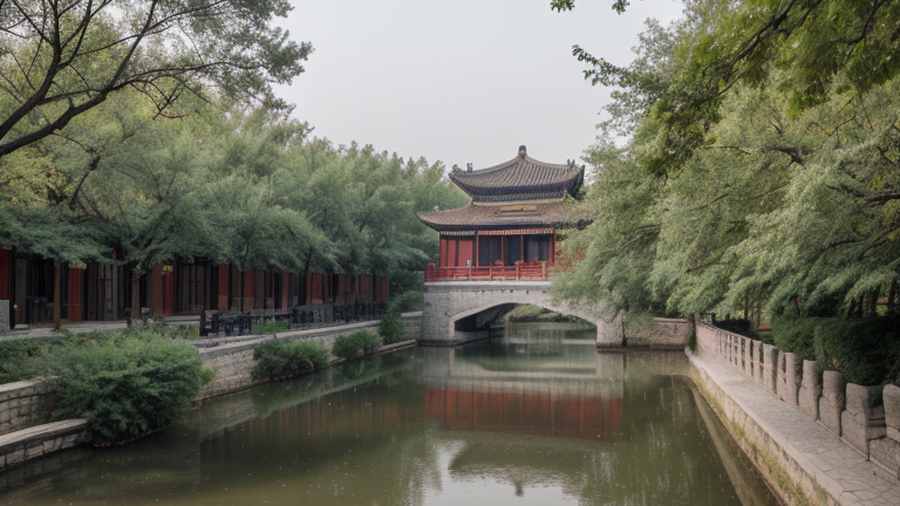
Zhangjiawan sits south-east of Tongzhou where the Grand Canal meets the Liangshui River; in Ming times it was a grain warehouse and trans-shipment town, and the skeleton of walls, gates and lanes survives. What you see today is the brickwork around the south gate, the stone lions on Tongyun Bridge, and the riverside street with the remains of old granaries, grass growing between the bricks. Walk in through the gate, follow the street to the bridge, then turn back along the river: an hour at an easy pace, and you can photograph the bridge when no cars are crossing. Park on the open ground at the entrance to town rather than driving into the lanes, where holiday traffic jams up; a two-hundred-metre walk is easier. The surface is stone slab and packed earth, gently undulating with no long flights of steps; push a pram slowly and wear shoes with grip after rain.
Grand Canal Forest Park
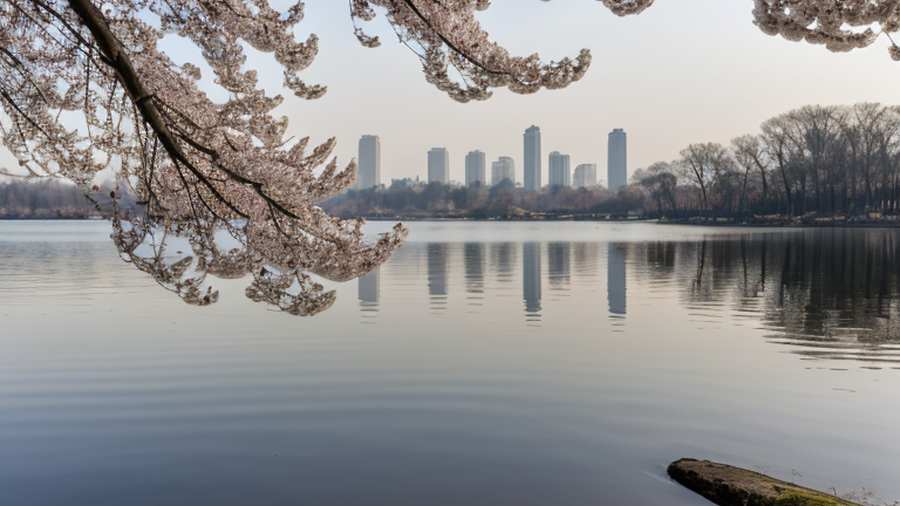
The Grand Canal Forest Park runs along both banks of the Beiyun River east of Tongzhou, one of the few long stretches of riverside green on the northern section of the canal. Part of the old wharf layout has been rebuilt, with a timber boardwalk reaching the water, a moon island, reed beds and several viewing decks; new reeds come up in spring, and the water catches the light in autumn. The park is large, about five kilometres round the river and two hours on foot, so most people pick a section: in at the west gate, along the boardwalk to the wharf, back round the island. Cycle lanes and footpaths are separate, good for prams and bikes. Parking is at both the east and west gates and fills after ten at weekends; half an hour earlier makes a difference. It is all flat ground with no steps, and the river is cold when the wind picks up, so keep a jacket.
- Where to eat
- Around Tongzhou, try braised catfish and the local sesame cakes; a few riverside restaurants cook old canal boat dishes. Dinner can be simple home-style food by the water or back in the city.
- Roads and driving
- Take the Jingtong expressway or Guangqu Road east, about half an hour; the East Third Ring is slow at rush hour, so leave before eight. The sights sit inside town with many junctions and a 60 km/h limit, and right turns must give way to pedestrians.
- Where to stay
- Stay in a hotel by the canal in Tongzhou, walking distance from the pagoda yard and the river. On a Rental Car for Foreigners in China loop it also works to return to the city on the first night and start early the next day.
Tips for the day
- Ranting Pagoda registers visitors at the gate; check the queue before walking in on busy days
- The east gate car park at the canal park fills by mid-morning at weekends, arrive before nine
- The canal gets windy after five, bring a light jacket
Day 2 Into the hills: a cave and the eastern valley
About 70 km today
Shihua Cave
Shihua Cave lies in the hills at Nancheying village, Hebei town, Fangshan, one of the few multi-level limestone caves in north China; the chambers step downward, level by level. Stalactites, stalagmites and the rare white moonmilk are well preserved, some hanging like curtains, others branching like coral, and the lighting is warm. A guided route takes about an hour. Inside it stays around fifteen degrees, cool in summer and mild in winter, and the floor is wet, so keep a hand on the rail. There are many steps, several hundred up and down in total; go slowly if your knees object, there are landings to rest on. Park at the cave entrance car park; in high season the queue forms mid-morning, so arriving early saves time. There is no free wandering inside; you stay with the guide in and out, and the square at the exit has stalls selling mountain produce.
Donghu Port
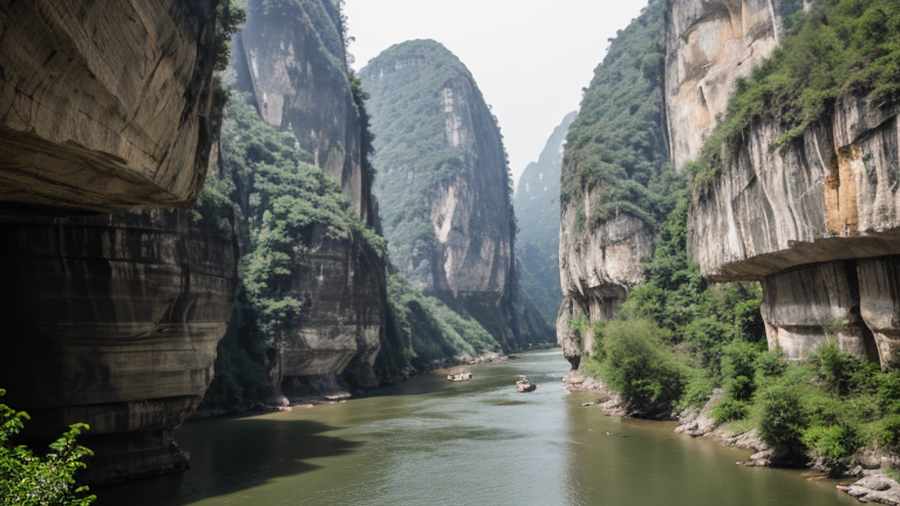
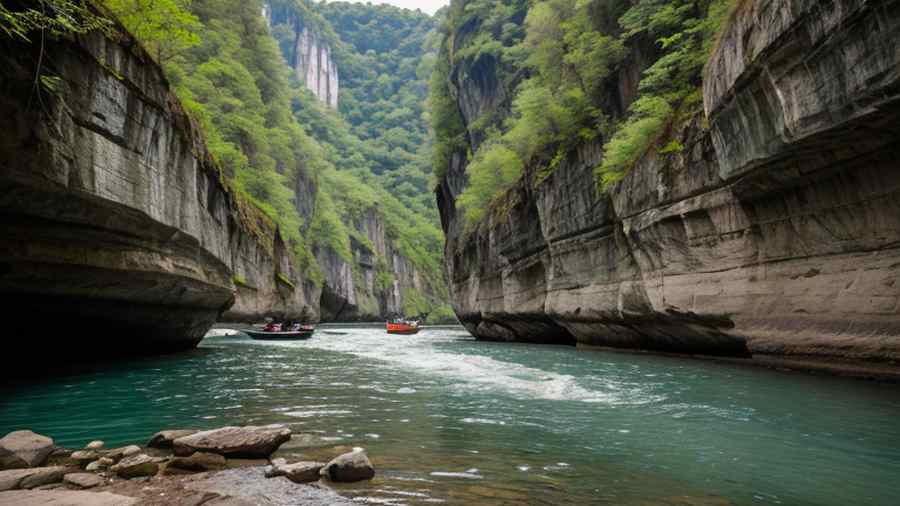
Donghu Port sits at the eastern end of Shidu where the Juma River bends, cliffs rising straight from both banks and water audible all along the gorge floor. A boardwalk follows the river and includes a glass viewing platform; the waterfalls run hard after rain, while fine weather shows clear pools and shingle beaches, and rafts put in downstream where the water slackens. Walk up the boardwalk to the platform and back, two hours at an easy pace; the glass deck queues when it is busy. Park at the entrance car park, or on the road shoulder at holidays, watching for oncoming traffic. The boardwalk climbs, and wet wooden steps are slippery: wear grip soles, and it is fine to turn back halfway if you are with older companions. Farmhouse restaurants sit by the entrance and the river beach is right beside the car park, so children can paddle afterwards, but fog builds in the afternoon and the climb should not start after four. Many guests drive in China for the first time on a Rental Car for Foreigners in China booking, and this is a good place to practise parking properly before walking rather than turning round on a narrow lane.
- Where to eat
- Farmhouse restaurants at Shidu serve river fish, chicken stewed with wild mushrooms and cornmeal cakes; portions are generous, so three dishes feed two. Mountain vegetables are fresh but salty, and the kitchen will go easy on salt if you ask.
- Roads and driving
- From Tongzhou take the Jinggangao expressway to Hebei town in Fangshan, then climb to Shidu: about ninety minutes, the last part on continuous bends. Fuel stations are scarce, so fill up before the hills. If this is a first mountain drive on a Rental Car for Foreigners in China trip, brake early for the bends and let oncoming cars through rather than racing the locals.
- Where to stay
- Stay in a guesthouse or farmhouse in the Juma valley at Shidu. Rooms are limited and spring and autumn weekends need booking ahead; nights by the river are cold, ask for a thick quilt.
Tips for the day
- The cave holds around fifteen degrees, bring a long-sleeved layer and proper shoes
- The one fuel station at Shidu is at the top of the village and closes early; fill up before the hills
- In flood season the rafts and some boardwalks close, ask before setting out
Day 3 Down the Juma valley and the stone sutras
About 100 km today
Juma River at Shidu
The Juma River at Shidu is a valley road through the Fangshan hills, the water running at the foot of the slopes with villages, ferry landings and bridges strung along both banks; the old ferry crossings were numbered, which is where the name Shidu, tenth crossing, comes from. The interest is in the road itself: bridges around the sixth crossing, shingle beaches in the river bends, bare rock faces above the water. Stop where you like. Park in the public bays by the river and walk down for ten minutes, but never on the inside of a bend where you block the lane. The road bends constantly with short sight lines and limits of 40 to 60 km/h; give way rather than push through. It is flat throughout, the beaches are stony, so wear proper shoes and watch the water level if children are playing. This is also the stretch where drivers on a Rental Car for Foreigners in China route first meet real mountain bends, so treat it as practice rather than a race.
Yunju Temple
Yunju Temple sits at the foot of Baidai Mountain in south-western Fangshan, where sutra carving began in Sui and Tang times and continued for generations; the stone slabs are stored in caves above the temple, one of the largest groups of carved sutras in China. There are two halves to a visit: the lower courtyards with halls, Tang and Liao brick pagodas and a display of the slabs, and the upper cave site reached by a mountain path. Park at the lower car park, see the halls and the display in about an hour, then climb to the caves if you have the legs, another hour both ways. The climb is several hundred stone steps, not steep but unrelenting; older visitors can wait below. The temple is quiet, so keep voices low in the halls, and trousers are more comfortable than shorts for sitting on stone steps.
- Where to eat
- Breakfast at the guesthouse; lunch on vegetarian noodles or home-style dishes at the small restaurants outside Yunju Temple, or wait until Fangshan town. Service areas are sparse on the way back, so pack water and snacks before leaving.
- Roads and driving
- Twenty minutes of mountain road from Shidu to Yunju Temple, then out to the expressway and back to the city in ninety minutes to two hours depending on traffic. The inbound lanes get busy after four, so leaving half an hour early is worth it.
- Where to stay
- No overnight stay is arranged; if you want an extra night, stay in Fangshan town or a riverside guesthouse at Shidu. The loop returns the car in the city on day three, which still leaves time for an evening flight.
Tips for the day
- Yunju Temple is quietest in the morning; no flash inside the halls
- The stone-step climb to the sutra caves is steady work, carry water and take it slowly
- Leave before four to miss the evening rush back into the city
Pages that help on this route
- Rental packages and what is included
- Temporary driving permit in China
- All routes by province
- A car that suits this route: Toyota Camry (Mid-size Sedan)
Costs to expect
Included: vehicle use, basic insurance, pick-up and drop-off. Not included: tickets, meals, hotels, fuel and tolls.
Driving tips
- Show passport and temporary driving permit at pick-up; city limits are 60 km/h and pedestrians have right of way
- Set the navigation to the car park rather than the gate; Tongzhou junctions are easy to overshoot
- Spring and autumn evenings are cold by the canal, keep a light jacket in the car
- Fill up in Fangshan town before the hills; Shidu has a single fuel station and it closes early