Route overview
A rental car for foreigners in China loop from Xuancheng: three days through Longchuan in Jixi, the Zhangshan gorge and the Huihang trail, about 320 km, expressway and county roads with plenty of bends but good tarmac. It suits travellers who want Huizhou ancestral halls and old villages without crowds, and who would like a proper Huizhou one-pot meal in the village. Picking up a rental car for foreigners in China in Xuancheng is straightforward and the mountain sections are short, so three days feels unhurried.
Highlights
- The woodcarving in Longchuan's Hu ancestral hall reads like a clan genealogy, court by court
- The roar of water and the Bai Zhang cliff in Zhangshan gorge, cool as air conditioning in summer
- The Jiangnan First Pass on the Huihang trail explains in one climb why Huizhou merchants took this road
- Easy village parking, so a rental car for foreigners in China has no trouble reaching these hamlets
Suggested itinerary
- Day 1Day 1 Xuancheng pick-up, Longchuan and Renli village, about 110 km
- Day 2Day 2 Longchuan to Zhangshan gorge, overnight in Jixi town, about 70 km
- Day 3Day 3 Jiangnan First Pass on the Huihang trail, back to Xuancheng, about 140 km
Day by day
Day 1 Xuancheng pick-up, into Longchuan
About 110 km, expressway and county road
Longchuan Hu Ancestral Hall
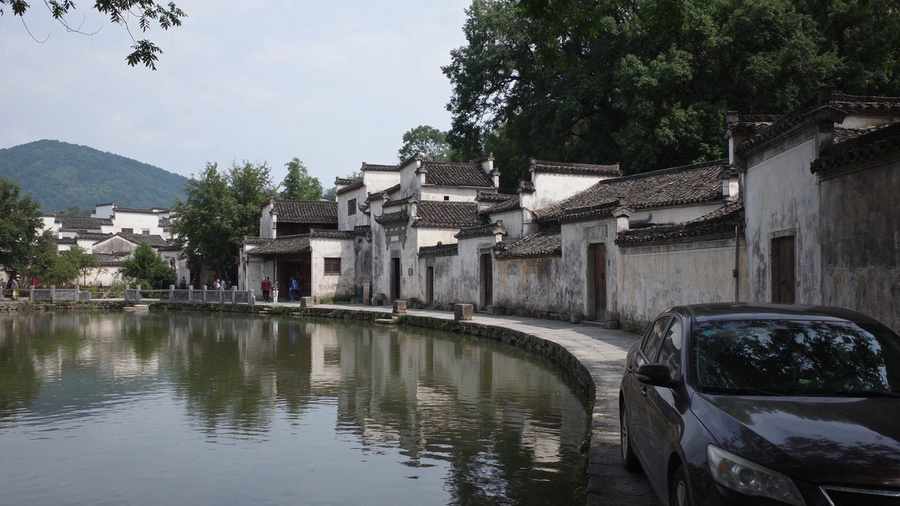
Longchuan sits eleven kilometres east of Jixi town on the Dengyuan river, the village stretched long and narrow along the water like a boat, hence its nickname. The Hu ancestral hall was founded in the Jiajing era of the Ming for the Longchuan Hu lineage: three courts and two light wells, and the beam carving is among Huizhou's finest, lotus on lotus, deer with cranes, a hundred deer winding across beams and brackets cut deep into the wood. Look at the hundred-deer panel in the main hall, the brick-carved door hoods and the stone balustrade and flagpole bases outside; the village produced Hu Fu, a Ming minister, and Hu Zongxian, the general who fought the Japanese pirates. Buy tickets at the village visitor centre, see the hall first, then walk the riverbank to Hu Zongxian's residence; ninety minutes is enough. Park at the visitor centre outside; the lanes inside are too narrow for cars. Many low steps and old slab paving, slippery in rain.
Renli Old Village
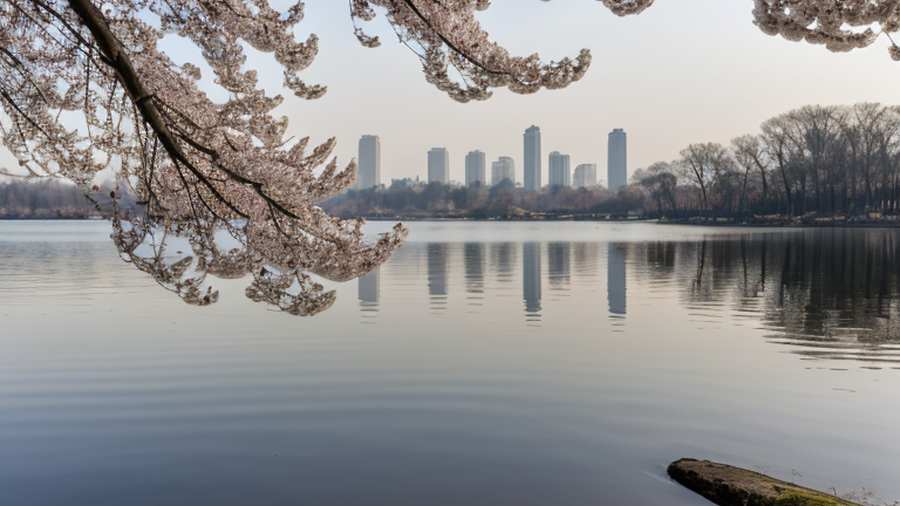
Renli lies two kilometres west of Longchuan, a Huizhou merchant village preserved fairly intact. The Cheng family went out to trade in the Qing and came home to build, and a dozen mansions remain, white walls and dark tiles with stepped horse-head gables. The best of it is the Peach Blossom Embankment and Dexin Hall: the embankment is a stone revetment along the river, and in spring the blossom and its reflection fold together on the water. There is no village gate ticket, only small charges at a few houses, and visitors are few, more chickens and dogs than people. Park on the open ground at the entrance, walk the main lane to the river and loop back past the hall; forty minutes covers it, longer if you sit on the embankment. Lanes are narrow with wide slab joints, awkward for pushchairs; flat shoes and an eye on the drainage channels.
- Where to eat
- Lunch in Longchuan: the Huizhou one-pot, layers of radish, pork and tofu parcels slow-cooked over charcoal. In Jixi town in the evening, try ta guo, a griddle cake of dried greens and pork crackling, with fried glass noodles.
- Roads and driving
- From Xuancheng take the Xuan-Ning expressway towards Jixi, then a dozen kilometres of county road to Longchuan, good surface with speed bumps and scooters at the village mouths. It is the smoothest stretch for a rental car for foreigners in China entering southern Anhui.
- Where to stay
- Stay in Jixi town for easy access to both village and gorge; for village quiet, guesthouses along the river at Longchuan.
Tips for the day
- No flash inside the ancestral halls; the carvings dislike strong light
- Village shops mostly want cash, so carry small notes
- Do not park on the river gravel when the Dengyuan is in flood
Day 2 Zhangshan Great Gorge, water all the way
About 70 km, county mountain road
Zhangshan Great Gorge
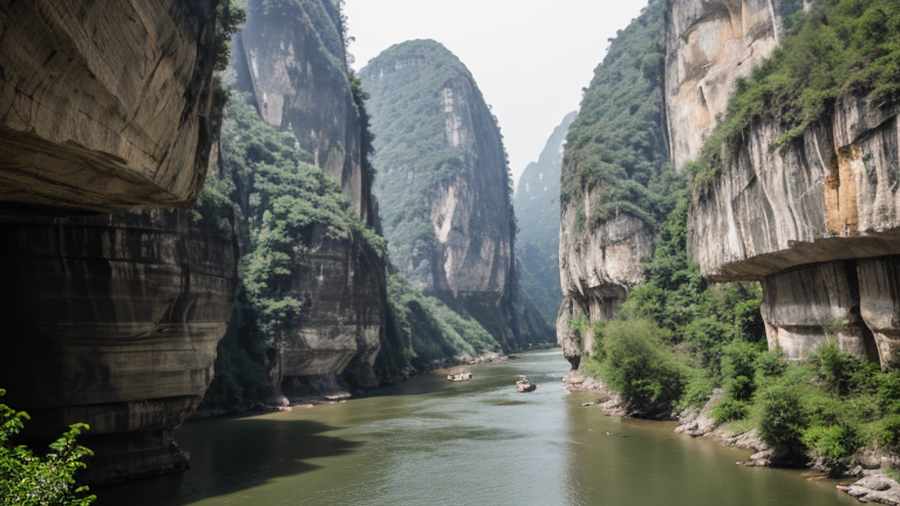
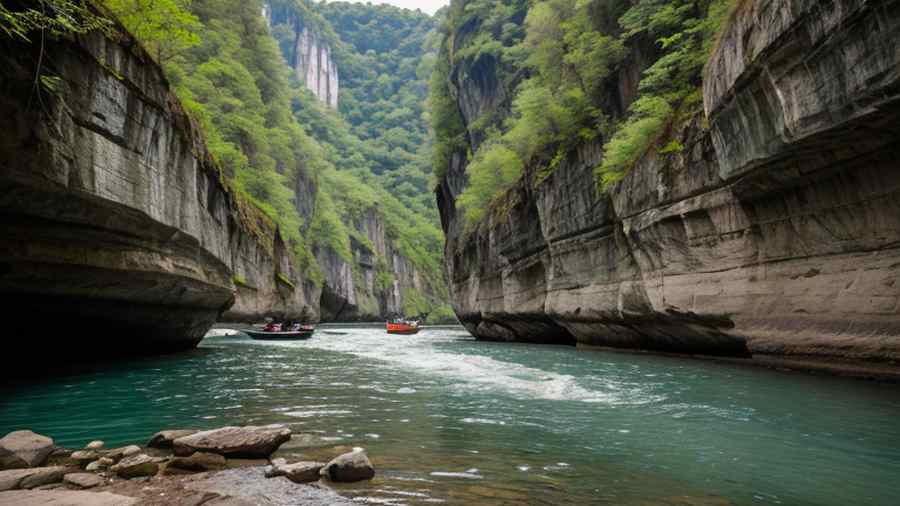
Zhangshan gorge cuts eight kilometres into the Dazhang mountains northeast of Jixi, the floor followed by a stream called Xiaoyao, granite cliffs on both sides and in places only a few metres apart, so you look up at a strip of sky. Its famous feature is the Bai Zhang cliff, a single granite face dropping more than four hundred metres, water splitting into strands over the top in the wet season and echoing the length of the gorge. Look for the cliff, the Tianmen ledge and the potholes at the bottom, stone cups ground out by water, the biggest large enough to hold a person. Walk in from the visitor centre along the boardwalk to the cliff viewpoint and back, about two hours with modest gradient. Parking is limited, so arrive early on holidays. Moss on the boards means grippy shoes; the gorge runs five or six degrees cooler than outside.
Jixi Old Town Quarter
Jixi's old quarter is small, centred on Cross Street and the North Gate, with late Qing shopfronts along granite slabs and faded trade names on white walls; the old Hu Kaiwen ink shop stands here. The county is a birthplace of Huizhou ink and Huizhou cuisine, and you can buy hand-made ink sticks and small pieces of Huizhou three-carving craft. Look for the yamen ruins, the Hu Kaiwen facade and the griddle-cake stalls whose stoves have burned for decades. Walk north from Cross Street at dusk to the gate tower and back, forty minutes, eating as you go. Use the town car park; the old streets are pedestrian. Flat going with wide slab joints, dim lighting at night, watch the steps. At the end of the street an old photo studio still hangs pictures of the county town from decades ago, and the owner will tell you a story or two.
- Where to eat
- Lunch at a farmhouse by the gorge mouth: rock fungus stewed with chicken and dried bamboo shoots with pork, the broth dark and deeply savoury. In town, pan-fried hairy tofu with chilli sauce, crisp outside and soft within.
- Roads and driving
- The county road from Longchuan to the gorge is flat along the river at first, then climbs with sharp bends and steep pitches; give way on single-track sections and watch for rockfall in rain. This is the stretch where a rental car for foreigners in China needs most care around Jixi.
- Where to stay
- Stay in Jixi town for the old quarter at night; farm stays near the gorge are basic but put you at the entrance early.
Tips for the day
- The gorge ticket includes the shuttle; the last run is at 5 pm
- No signal inside the gorge, agree a meeting point
- The boardwalk is wet in summer; deep tread helps
Day 3 The Huihang Trail, back to Xuancheng
About 140 km, mostly expressway
Jiangnan First Pass
The Huihang trail starts at Fuling town in Jixi and crosses Xiaoyao ridge into Lin'an in Zhejiang, the road where Ming and Qing Huizhou merchants carried tea, timber and salt to Hangzhou, about twenty kilometres in all. The Jiangnan First Pass sits above the trailhead, a stone gateway wedged between two hills with steps climbing away beyond it, the steepest risers half a foot high, so porters walked up sideways. Look at the stone arch, the characters cut into the cliff and the rooftops of Fuling seen from the top. Walk up from the visitor centre in about forty minutes, photograph the pass and come back down; no need to do the whole traverse. Park at the Fuling visitor centre; the trail takes no vehicles. Steps are steep and narrow and hurt knees on the way down; poles help.
Fuling Old Village
Fuling is the village at the trailhead, Huizhou houses strung along a stream, a stone bridge at the entrance with water coming down from the mountain and children playing under the arch in summer. A few Qing mansions survive, brick carving still on the door hoods and eaves deep enough to keep you fairly dry in rain. Look for the bridge, the old hall and the autumn drying racks, chillies and maize hanging under the eaves. Park at the town entrance and walk a loop along the stream, half an hour, with a bowl of noodles by the bridge. The lane is narrow, so find a wide spot to pass, and keep the car out of the alleys. Moss on the slabs, slippery after rain. An old locust tree stands before the hall; in summer the villagers put out tables and eat beneath it, and a passer-by who sits down is rarely shooed away.
- Where to eat
- Lunch in Fuling: dried bamboo shoots with old duck, the broth milky, and hand-made thin noodles. Back in Xuancheng, try the Shuiyang three treasures, duck feet, duck wings and dried tofu braised together.
- Roads and driving
- About thirty kilometres of county road from town to Fuling along the Dengyuan river, bendy but with good sightlines; Fuling back to Xuancheng is about 100 km of expressway with evening congestion at the city edge.
- Where to stay
- No overnight if you return the car today; to stay on, a hotel below Jingting Hill in Xuancheng gives you a morning walk.
Tips for the day
- The trailhead registers ID, so keep your passport with you
- Buy water in town before climbing; nothing at the pass
- Descending hurts the knees, so zigzag rather than stride
Pages that help on this route
- Rental packages and what is included
- Temporary driving permit in China
- All routes by province
- All cars in the fleet
Costs to expect
Included: the vehicle, basic insurance, paperwork help at pick-up and drop-off, a trilingual road book and village parking notes. Not included: hall and gorge tickets, meals and hotels, fuel and tolls, the trail shuttle. Charges for a rental car for foreigners in China are settled per day and itemised at handover. Before a rental car for foreigners in China enters a village, the agent puts the parking spot and walking route into the road book.
Driving tips
- No flash inside the Longchuan halls; the carvings dislike strong light
- The gorge path is damp, wear shoes with real grip
- Walk only part of the old trail and turn back; a full traverse needs a second car at the far end