Why I Now Always Stash A Paper Map In My Glove Box For Yunnan Self-Drive Rental For Foreigners
Last October, I was trundling up the winding tarmac between the hamlet of Nine Villages and Shangri-La, in a 1.5L VW Lavida I’d picked up that morning. The sky was that sharp, unfiltered high-altitude blue that makes your eyes water if you stare too long, and the last of the autumn poplars blazed gold down the valley. Halfway up a 3,200m pass, my phone died. Not the usual 1% slow death, just blinked black, done for, the cold sapping every last joule out of the battery. I had no signal, no offline map loaded, and the only signpost ahead was half-obscured by a landslide slip of loose gravel. I’d done the exact drive three times before, but I suddenly couldn’t remember if the left turn at the next hairpin led down to a village or off onto a forgotten logging track. Yunnan self-drive rental for foreigners has one bottleneck, and this is it.
Luckily, I’d grabbed a crumpled paper map from the pickup counter, half by accident, and that 80g sheet of paper got me all the way to my guesthouse without a single wrong turn. That’s the moment I stopped treating paper maps as a retro gimmick for Yunnan trips, and started recommending every traveller I meet to grab one before they leave the city. That is the side of Kunming airport car rental for foreigners the brochures leave out.
Sorting Your Pickup: Kunming Airport Car Rental For Foreigners First Stop
Most people fly into Kunming to start their Yunnan loop, and if you’re arranging Kunming airport car rental for foreigners, you can ask for a proper printed regional map right at the desk before you sign the checklist. I don’t mean the flimsy single-page tourist flyer that only marks the big 5 scenic spots, either. The good ones are the fold-out A3 maps that mark every minor side road, mountain pass, village fuel stop and even the little unmarked temples tucked off the main highway. The desk staff usually keep a stack under the counter, and they’ll hand one over for no extra charge if you ask.
It’s worth noting that you can arrange your China temporary driving licence for 1500 without attending in person before you arrive, so all the paperwork will be ready to go when you land. The VW Lavida 1.5L or Jetta 1.4T petrol models cost 260 per day, with a 3000 rental deposit and unlimited mileage, which is perfect if you’re sticking to the main paved roads between Kunming, Dali and Lijiang. If you’re planning to head further up some of the rougher tracks outside Shangri-La, the Tank 300 2.0T is 400 a day, with a 5000 rental deposit and a 300km per day limit.
Don’t make the mistake I saw a couple from Manchester make last spring: they grabbed their keys, hopped straight in the car, and set off for Dali before checking the map, assuming their digital navigation would hold out the whole way. 70km outside Kunming, they hit a stretch of road where the signal cuts out completely for 40km, and they ended up taking a 50km detour down a farm track before they found a village where they could stop and ask for directions. They lost half a day of their trip over it.
Using Your Paper Map: No Signal, No Stress
First, do your prep while you still have full signal, while you’re sat in the airport car park after pickup. I mark my intended route on the map with a thin pencil, so I can rub it out and adjust later if I fancy a detour. I note down every major town I’ll pass through, the approximate distance between them, and where the next fuel station is. There’s nothing more disconcerting than glancing down at your fuel gauge and realising you have no idea when the next petrol stop is coming up, with no way to check your navigation.
I keep the map tucked in the side pocket of the driver’s door, not in the boot, so I can reach it without fumbling around. I don’t try to unfold the whole thing while driving, obviously – I only ever glance at it when I’m pulled over at a safe layby, or when my passenger can read it out to me. Last trip, I had a mate in the passenger seat who kept a running note of what kilometre marker we were at, cross-referencing it with the numbers printed along the map’s main roads. It sounds basic, but it works when every other method fails.
There are stretches of road between Dali and Shangri-La where you can drive for an hour without a single bar of mobile signal. It’s not a flaw in your phone, it’s just the terrain: steep valleys, thick forest, and high mountain ridges that block every tower signal for miles. Digital navigation will often freeze, or start plotting you on a road that doesn’t even exist, and that’s when the paper map earns its keep. I’ve had my navigation try to send me up a closed forest track that was washed out in a monsoon two years ago, and the paper map clearly marked that the track was impassable, so I stuck to the main highway instead.
Planning The Mid-Leg Swap: Dali Lijiang Car Rental For Foreigners
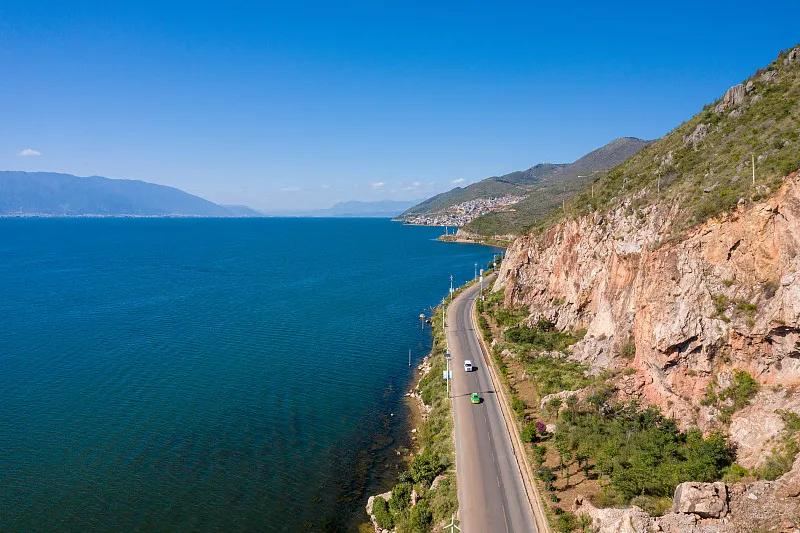
A lot of people choose to do a one-way rental, finishing their trip in Lijiang instead of looping back to Kunming, and Dali Lijiang car rental for foreigners is straightforward if you plan ahead. The one-way return fee for dropping the car off in Lijiang is 1500, and you can pick up an updated local map for the Dali and Lijiang surrounding area at the city office if you didn’t grab one in Kunming. The local maps for this region are even more detailed, marking all the little quiet village roads around Erhai Lake and the back lanes leading up to the jade dragon snow mountain foothills that digital navigation often misses.
One thing I always do before I leave Dali is sit down with the new map and cross-reference it against the notes I made on my first one, so I can plan the slow scenic route up to Lijiang instead of sticking to the main expressway. The small road that runs along the west bank of Erhai Lake is far more pleasant than the dual carriageway, with little tea stalls and old Bai ethnic villages dotted along the shore, and half the time you won’t see another tourist car for 20 minutes. I wouldn’t have found it if I’d only relied on my digital navigation, which kept trying to push me onto the faster main road.
A quick note on rental rules, since I’ve had people ask me about this after trips: the rental deposit is refunded 5-7 working days after you return the car, once the traffic fine check is complete. Insurance includes compulsory and commercial cover, and minor scratches under 1500 are paid by the client, while damage above 1500 goes through insurance with the client bearing 30%. Scratches that don’t damage the primer are free, and there are no downtime or depreciation charges for paintwork or replaced parts, with downtime waived within 5 days for major damage. If the vehicle breaks down for a mechanical reason, that’s covered, but towing for a client-caused reason is at the client’s expense. The 600 booking deposit is non-refundable if you cancel for personal reasons, so it’s worth locking in your dates once you’re sure of your plans.
My Final Small Tips For Paper Map Use
Don’t treat your paper map like a precious souvenir. Fold it roughly, mark on it, spill tea on it, whatever. It’s there to be used. I keep a small plastic wallet in the car to tuck it into if it’s raining, so it doesn’t turn to pulp on the drive. I also never throw my old maps away – I’ve got a stack of them at home from different Yunnan trips, marked with all the little hidden spots I’ve found, the quiet guesthouses, the roadside noodle stalls that serve the best crossing-the-bridge rice noodles I’ve ever eaten.
Last month, I was driving a group of friends up to a small alpine lake outside Shangri-La, and all three of their phones had died at the same time in the cold. I pulled out my crumpled map, found the unmarked turning we needed, and got us there without any hassle. My mates were laughing about how they’d never seen anyone use a paper map for a trip before, but by the time we were sat by the lake drinking hot tea, they all admitted it was the most sensible thing I’d packed.
You don’t have to ditch your digital navigation entirely, obviously. It’s great for finding parking spots in Dali old town, or checking when the next fuel station is on the main expressway. But having that paper map as a backup? It turns a potentially stressful situation where you’re lost with no signal into just a quiet, slow drive through the hills, no panic required.