Planning a Gentle Low-Altitude Yunnan Self-Drive for Travellers With Mild Mobility Limitations
Last March I was camped out on a roadside bench outside Dali’s old town, sipping jasmine tea that cost 5 kuai a cup, when I met a retired couple from Birmingham. The husband used a lightweight rollator, they’d flown in from Kunming, and every group tour they’d booked had bailed on them when they said they couldn’t tackle the 3,200m steep pass up to Cangshan’s west side. They’d given up on seeing anything beyond the city square until I sat down and drew them a route on the back of a crumpled train ticket, no steep climbs, no sudden altitude spikes, all smooth tarmac, all stops with level access. Kunming airport car rental for foreigners has one bottleneck, and this is it.
That’s the route I’ve tweaked and tested half a dozen times since, for people who don’t want to jolt up hairpin bends, who need regular flat rest stops, who can’t be scrambling out of a car onto loose gravel at 3,000m without advance warning. The best part? You don’t have to commit to a 10-day itinerary before you arrive. You can adjust it day by day, at your own pace. That is the side of Dali Lijiang car rental for foreigners the brochures leave out.
Getting Your Rental Sorted Before You Leave the Airport
I’ve made the mistake before of hanging around the airport arrivals hall for two hours waiting for a pre-booked taxi to a city rental office, legs stiff after a 12-hour flight, hauling a rollator up a kerb that had no dropped access. That’s why I always tell people to sort Kunming airport car rental for foreigners first, before they even leave their departure lounge. There’s no faffing about with chasing permits when you land: a China temporary driving licence can be arranged for 1,500 without the client attending in person, so all you need to do is show your valid home driving documentation at the pickup desk, sign the checklist, and you’re behind the wheel 20 minutes later, no detours. Everyone I know who has dealt with Yunnan self-drive rental for foreigners tripped on this.
For this specific gentle route, I don’t see any point paying extra for a big off-roader. The VW Lavida 1.5L or Jetta 1.4T petrol is 260 per day, rental deposit 3,000, unlimited mileage, and the seats sit at the perfect height to swing yourself in and out without hunching or hauling. The ride is soft enough that minor potholes on the county roads won’t jolt your joints, and there’s more than enough boot space for a folded rollator, a cool bag of snacks, and the stack of silk scarves everyone ends up buying from the Dali markets. Save the Tank 300 2.0T, which is 400 per day with a 5,000 rental deposit and 300 km per day limit, for trips where you’re actually heading off tarmac – you won’t need it here, and you’ll just be paying extra for fuel you don’t use. The tricky part of Kunming airport car rental for foreigners is always the bit nobody explains.
The rental deposit is refunded 5-7 working days after return, once a traffic-fine check is complete, and all the insurance includes compulsory and commercial cover. Quick heads up, no one tells you this up front: minor scratches under 1,500 are paid by the client; damage above 1,500 goes through insurance with the client bearing 30%. Scratches that don’t damage the primer are free, no downtime or depreciation charges for paintwork or replaced parts, and downtime is waived within 5 days for major damage. If the vehicle breaks down for a mechanical reason, we cover it; towing for a client-caused reason is at the client’s expense. The booking deposit of 600 is non-refundable if you cancel for personal reasons, so it’s worth locking your dates in once your flights are confirmed.
Last trip I was halfway to Eshan when a stray chicken ran out in front of me. I swerved, caught a low stone kerb, scraped the front bumper, and stood there panicking for 10 minutes before I remembered the scratch didn’t go through the primer. I didn’t pay a penny for it when I dropped the car off. Total waste of a good panic.
The Low-Altitude Route, No Steep Passes In Sight
Forget the standard tourist itineraries that send you straight up to 3,300m Shangri-La on day two. This route never goes above 2,200m for the first four days, and all the climbs are gradual, so you can stop every 40 minutes if you need a rest, no sharp bends to catch you out.
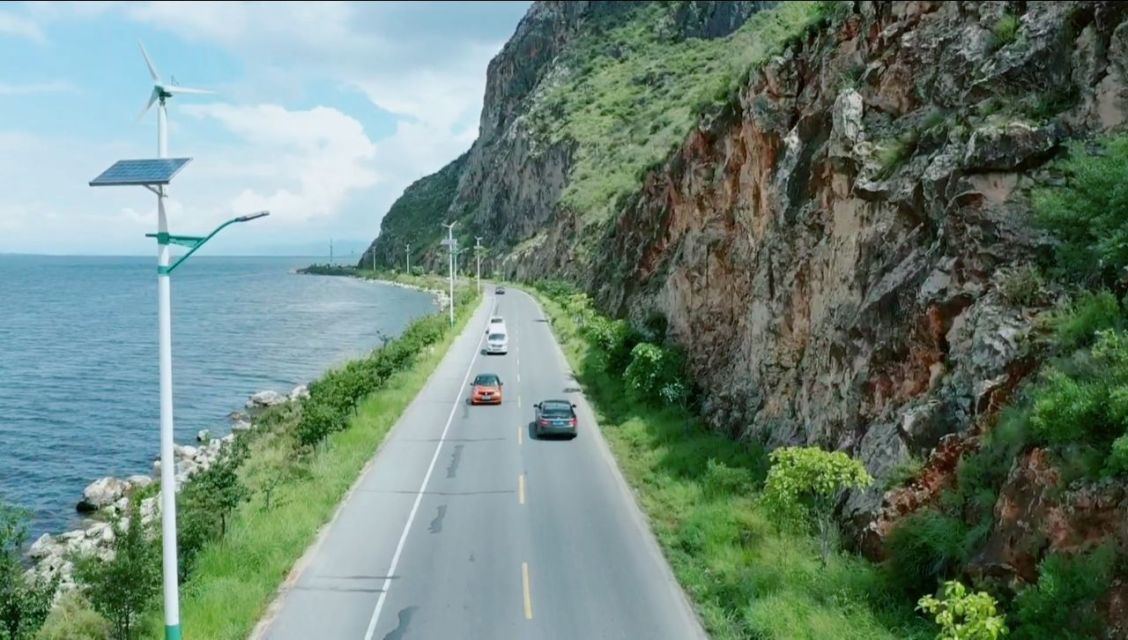
- Day one: Kunming airport to the west bank of Dian Lake, 40 minutes’ drive. The whole ring road around the lake is flat, smooth, there are level viewing platforms every few kilometres, and you can stop and feed the seagulls in winter without climbing a single step. I once spent three hours here just sitting on a bench eating fried potatoes, watching the boats drift past, no rush at all.
- Day two: Kunming to Chuxiong, 1.5 hours. The dual carriageway is dead straight, no gradients to speak of, and the old town there has wide, flat cobblestone lanes, no steep steps, and street food stalls that sell warm sweet potato that tastes better than any dessert I’ve ever had.
- Day three: Chuxiong to Dali, two hours. The road runs alongside a river most of the way, you can see the red clay hills rolling past the window, and you never climb more than 100m over the whole stretch. There’s a rest stop halfway with a fully accessible toilet, wide parking bays, and a little stall that sells cold sugar cane juice that’ll cool you down on a warm afternoon.
- Days four to six: Dali and Erhai Lake. Stick to the east bank ring road, not the steep west side that climbs up towards Cangshan. The east bank is completely flat, all the car parks are level, you can pull over wherever you want to watch the sun set over the lake, and the old town’s south gate has a fully accessible ramp that most tourists don’t even know exists.
If you get to Dali and you’re feeling good, you can extend the trip gently up to Lijiang, no 3,000m passes required. The main road between Dali and Lijiang is smooth, gradients are never steeper than a gentle incline, and you can stop at Xizhou village for a plate of raw pork salad, no detours up into the mountains. If you don’t want to drive back to Kunming, Dali Lijiang car rental for foreigners includes a one-way return fee of 1,500, so you can drop the car straight off at Lijiang city office or the airport, no need to retrace your steps for hours.
I met a woman from Toronto last year who had mild arthritis, did this exact stretch, and told me it was the first time she’d been able to travel independently in 12 years, no tour guide hurrying her, no bus steps too high to climb. She sat by Erhai Lake for three whole afternoons, painting the mountains, and said she never once had to ask anyone for help getting in or out of the car.
Small Practical Tips No One Else Writes Down
Navigation is straightforward, all the main roads are clearly signposted, and the parking spots at every major scenic spot have wide enough bays to open the passenger door fully without bumping into the car next to you. Avoid peak midday driving in July and August, the tarmac glares so bright it hurts your eyes, and it’s far nicer to drive early morning when the air is cool, the roads are quiet, and the local farmers are walking their goats along the verges.
I’ve seen people get flustered trying to work out parking fees, but almost all the scenic spots on this route have attendants who will wave you through if you take a minute to gesture and show them your mobility aid. No one’s in a rush here.
Yunnan self-drive rental for foreigners doesn’t have to mean tackling hairpin bends up to 4,000m peaks, or pushing yourself further than you’re comfortable with. This route lets you take in all the soft, slow bits of the province, the sun on the lake, the smell of jasmine from the roadside stalls, the sound of local folk music drifting out of Dali’s old town lanes, without any of the stress of steep mountain passes or sudden altitude spikes.
You don’t have to tick every box on the tourist list. Some of my best days in Yunnan have been spent driving 20 minutes down a random side road, pulling over at a tiny village stall, eating a bowl of noodles with people I can’t speak a word of shared language with, and watching the clouds drift over the hills.
That’s the point of the trip, isn’t it?