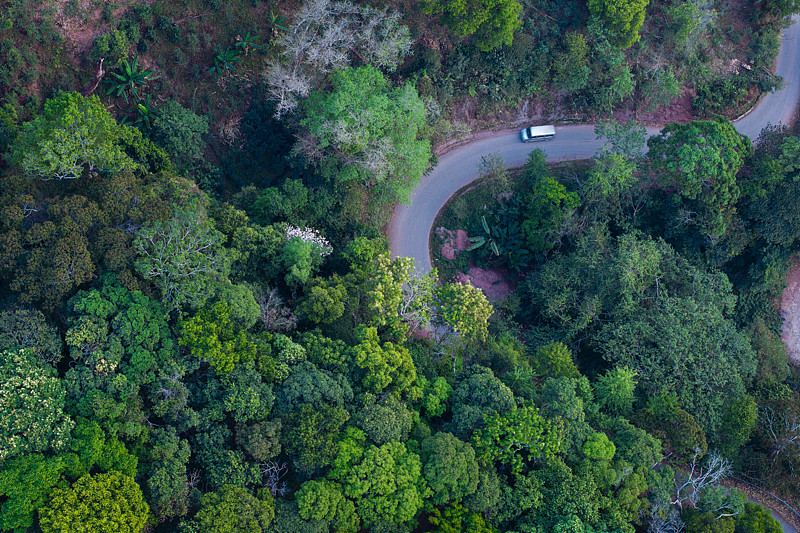
Every summer I get messages from travellers who have seen the word "monsoon" on a forecast and are now wondering whether their Yunnan car rental is a mistake. I understand the worry, but the picture is usually far less alarming than it sounds. The rainy season here does not mean weeks of solid grey rain; it mostly means short, sharp showers that arrive in the afternoon and clear again, with the occasional heavier spell on the mountains. Once you know how the weather behaves and how to respond when a road is affected, driving through it is perfectly manageable. Let me share what I tell friends who come in the wetter months.
What the Yunnan rainy season is really like
Broadly, the wet season runs from around June through to early September, with July and August carrying the most rain. The pattern is fairly consistent: mornings often start bright and clear, clouds build through the middle of the day, and a heavy shower or thunderstorm comes through in the afternoon or evening before easing. That rhythm actually suits a road trip, because you can do most of your driving in the dry morning and arrive somewhere before the afternoon rain. It is not like a coastal storm that settles in for days; the showers move through, and the sun is often back out within an hour or two.
Sudden showers and reduced visibility
When a shower hits, the change can be quick, and the first few minutes on a dry road are the slipperiest because the water mixes with oil and dust on the surface. Slow down smoothly rather than braking hard, switch on your dipped headlights, and put more space between you and the car ahead. If the rain becomes so heavy that you can barely see the vehicle in front, the sensible move is to pull into a safe parking area or a wide, legal lay-by and wait it out; these intense bursts rarely last long. Much of the advice in our low-visibility driving notes applies here, especially around lights and keeping your distance.
Landslips, falling rocks and closures
This is the part people rightly ask about. After sustained rain, steep cuttings and hillside sections can shed mud and small rocks, and occasionally a more serious landslip will close a lane or a whole road. You will not usually be the first to discover it; local authorities are quick to put out signs and cones, and on busier routes there may be a police presence. Never drive around a barrier or move a cone to squeeze through, because the road beyond may be genuinely unstable. The traffic rules for visiting drivers are worth reading, and obeying a closure is both a legal and a safety point. A blocked road is a delay, not a challenge to defeat.
Mountain detours and timing
When a mountain section is closed, traffic is generally sent along a signed diversion, often through nearby villages on narrower roads. These detours take longer than the map suggests, so build in slack and do not try to make up time on the bends. I plan wet-season days with shorter driving blocks and an earlier finish, aiming to be settled at the next town by mid-afternoon before the showers build. If you are crossing high passes, check the weather and road status in the morning using a navigation app rather than setting off on assumptions; the navigation apps guide covers which ones give useful traffic and closure information in China.
Wet braking, tyres and following distance
Our cars are maintained and checked between rentals, but wet roads still ask more of both tyres and brakes. On a wet surface the stopping distance grows noticeably, so I roughly double the gap I would keep in the dry and avoid any sharp steering. After driving through deep standing water, test the brakes gently with a few light presses to dry them; if the pedal feels soft or the car pulls to one side, slow down and contact us rather than pressing on. Puddles can hide potholes, so where you can see the water is deep, ease off and pick a careful line rather than charging through at speed.
Fuel, stops and planning on wet days
Small hillside stations can be busy or briefly shut if a road is affected, so I fill up while the tank is still comfortably above half and never let it run low on a wet mountain run. Build in more tea and meal stops; the rain is a good excuse to sit out a shower in a warm restaurant rather than fighting it. Keep a light layer and an umbrella in the cabin so that getting in and out at viewpoints does not leave you soaked. If you are travelling with family, the relaxed pace and frequent stops also keep passengers comfortable on grey days.
If the weather turns while you are out
Keep the rental paperwork and our contact details to hand, and remember that a call to us is always the quickest way to resolve anything from a diversion you do not understand to a road that has just been closed. If there is any kind of incident, the accident process guide sets out the steps, and staying calm and parked is far safer than pushing through. As for whether the rainy season is worth it, the countryside is lush and green, the waterfalls are full, and the light after a shower can be lovely; it just rewards a slower, more flexible plan than the dry months. Choose the mornings for driving, respect the closures, and the rain becomes part of the trip rather than a reason to cancel.
If you are putting a trip together, this driving from kunming airport to tengchong and ruili walks through the practical steps.
Zara
Yunnan Province International Travel Agency (Group) Co., Ltd.
WeChat/WhatsApp: +86 13759155671
WeChat handle: qxzj7557
Email: [email protected]