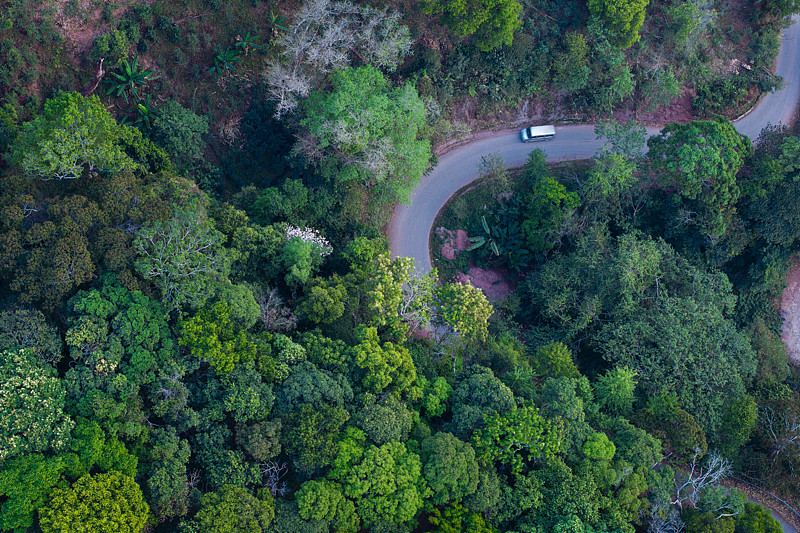
For travellers who enjoy forested mountains and the romance of old trade routes, the Ailao range offers a compelling trip within relatively easy reach of the city. It is a long, forested chain rising between the plateau and the hot Red River valley, famous for its cloud seas, its preserved stretches of the old tea-horse road and the ethnic villages tucked into its slopes. A drive here after a Kunming airport car rental for foreigners combines genuine wilderness with a good deal of history, and it suits visitors who want mountain scenery without the extreme distances of the remote gorges. This guide covers what there is to see, how the roads work, and the practical preparation that keeps the journey comfortable and safe.
The range and its forest character
The Ailao mountains form a substantial natural barrier running through central Yunnan, and their wet, forested slopes hold a remarkable variety of plants and birds, with parts of the range protected as nature reserves. The high ridges often sit above a layer of cloud, particularly in the morning and after rain, producing the cloud seas for which the area is known, while the valleys below stay warm and green. Walking the forest trails in the cool, misty air feels quite different from the dry, open landscapes elsewhere in the province, and the sound of streams and birdsong replaces the noise of town. It is a place for nature and quiet, and the protected areas ask visitors to keep to the paths and leave the forest undisturbed.
The tea-horse road and the history
The old tea-horse trails, along which caravans once carried tea and salt between the southern hills and the distant markets, pass through these mountains, and sections of the stone-paved route survive in the forest. Walking a stretch of it is a vivid way to connect with that history, imagining the mule trains and the traders who moved through these same valleys, and the villages along the way often began as staging posts. The local Hani and Yi communities have farmed the slopes for generations, building the terraced fields that step down toward the river, and their villages and customs are part of the story. The Yuanyang terraces guide covers the wider terraced landscape created by the same cultures, and the two trips pair naturally.
The mountain roads and the driving
The roads into the range climb from the warmer valleys through tight bends and forested sections, with the high stretches often misty and wet, and the going is slower than the distance suggests. The mountain road guide sets out the techniques for bends and descents, and the rainy season guide explains the wet-weather risks, including the greater chance of landslips. An ordinary sedan manages the sealed roads comfortably, while a more capable vehicle helps if you plan to follow rougher side tracks, and the choice is worth discussing when booking. Drive patiently, use the low gear on long descents rather than riding the brakes, and watch for fog, slow vehicles and occasional wildlife on the high roads.
Best timing and the weather
The cloud seas are most reliable in the early mornings and after rain, which makes an overnight stay in the mountains worthwhile rather than arriving late in the day. The drier months give the safest road conditions and the clearest long views, while the warmer months are lusher but wetter and more prone to disruption. Even at the height of summer, the high forest is cool, so carry a warm layer and waterproofs alongside sun protection, and expect the weather to change quickly on the ridges. Checking the forecast and the road conditions before the climb is a sensible habit, and building a little flexibility into the schedule means a misty day can be spent in a village rather than forced on a difficult drive.
Walking the trails and respecting the reserve
A good part of the pleasure here is on foot, and a little care makes the walks both safer and more rewarding. Wear shoes that grip on wet stone, carry water even for short walks, and keep to the marked paths, because the forest is steep in places and the ground can be slippery after rain. A Kunming airport car rental for foreigners brings you to the trailheads in comfort, but once you are among the trees the pace should slow to the landscape, giving time to watch the birds and listen to the water rather than pushing for a distance. The protected zones are home to sensitive plants and nesting birds, so keep noise low, take every wrapper away and leave the forest as you found it. If a path is closed or a sign asks visitors not to enter, treat it as a firm boundary rather than a suggestion. Walking quietly this way, you stand a better chance of seeing the wildlife and feeling the stillness that makes these mountains special.
Villages, supplies and practical readiness
The mountain villages are welcoming but simple, so it is worth filling the tank and stocking up on water, snacks and a little cash at the larger towns before climbing, where fuel stations and shops are fewer. Save an offline map for the high stretches, as the mobile signal can be weak, and keep the phone charged for photos and navigation. The car type guide helps match the vehicle to the route and the number of passengers. When visiting the villages, ask before photographing people, respect the terraces and the farmland, and take all rubbish away. A meal or a homestay in the community is a pleasant way to support the local economy and learn about life on the slopes.
The short version
The Ailao mountains are a forested, history-rich range reached after a comfortable drive following a Kunming airport car rental for foreigners, offering cloud seas, surviving tea-horse trails, ethnic villages and cool mountain air. Prefer the drier months and early mornings, take the winding roads slowly in a suitable car, and stock up before the climb. Send me your dates and I will plan the route and the stops, so you can enjoy the forest and the old trails without the trip feeling remote or difficult.
Zara
Yunnan Province International Travel Agency (Group) Co., Ltd.
WeChat/WhatsApp: +86 13759155671
WeChat handle: qxzj7557
Email: [email protected]