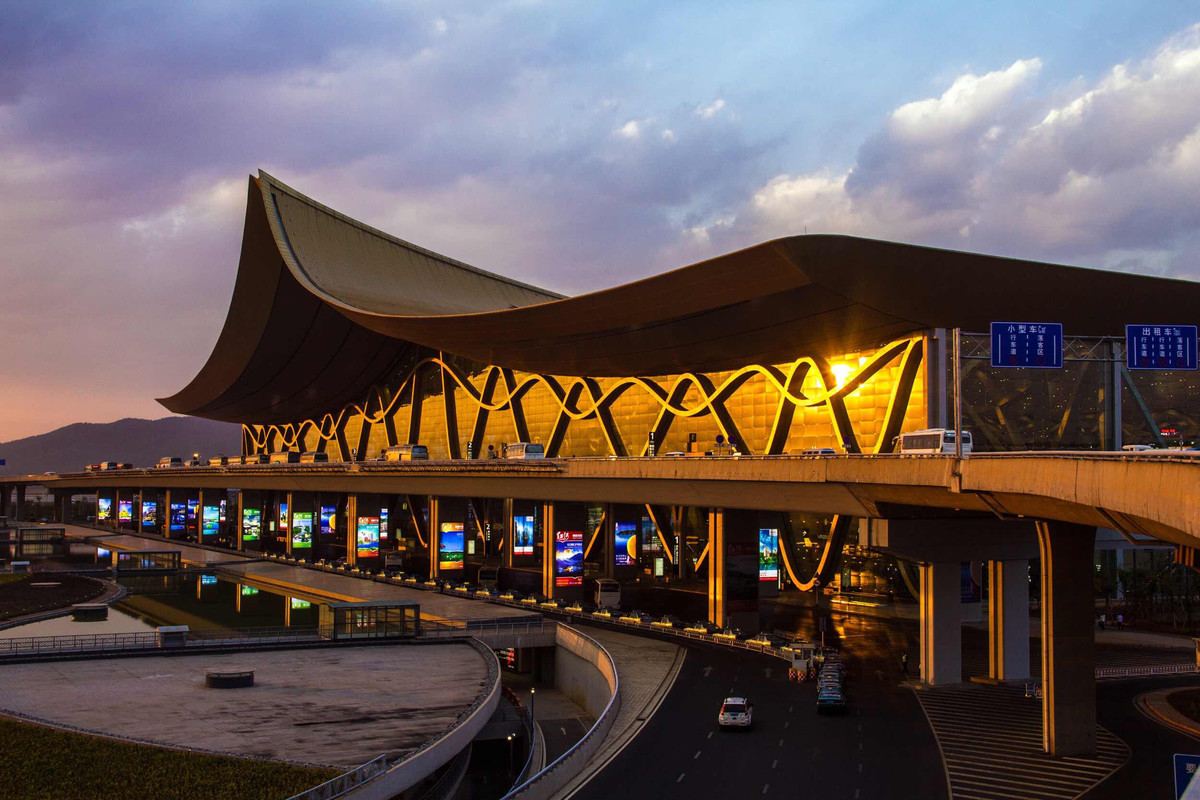
Last spring, I stepped out of Kunming Changshui International Airport into the sharp, thin mountain air, the tarmac glinting pale gold under mid-morning sun. I’d arranged a rental for a two-week loop through Yunnan, and within 20 minutes of leaving the airport access road, I nearly missed a speed camera tucked behind a roadside willow. That close call is the reason I’m writing this: if you’re planning Kunming airport car rental for foreigners, the suburban roads right outside the terminal are where most first-time visitors misjudge speed limits, long before you hit the mountain passes to Dali or Lijiang.
Why the roads right outside the airport trip up first-time visitors
I’d spent three days poring over route maps before landing, marking turnoffs to the Stone Forest and the old tea horse road trails, but I barely glanced at the speed signs on the 20-kilometre stretch between the airport and the G56 expressway junction. When I picked up my VW Lavida 1.5L – the standard petrol option, RMB 260 a day with unlimited mileage – the agent waved me off with a quick note about cameras, but I’d assumed suburban limits would match what I’m used to on the M25 outskirts back home.
They don’t. The first 12 kilometres out of the airport, the road cuts through small villages and fruit orchards, with scattered tractor crossings and kids walking to primary school. I hit the first 60 km/h limit sign just as I was settling into 80 km/h, my foot heavy after the long flight from London. I braked hard, and the driver in the pickup behind me laid on the horn, leaning out the window to gesture at the camera gantry overhead. That’s when I realised: these suburban roads don’t have the clear, consistent signage I’m used to in the UK. Signs pop up unannounced, hidden behind roadside foliage, and the limit drops without much warning when you pass a built-up area.
I’d chosen the Lavida for the trip, rather than the Tank 300 2.0T (RMB 400 a day, with a 300km daily mileage limit) because I knew most of my route would be paved highway, not off-road trails. The 3,000 RMB rental deposit for the Lavida is refunded 5-7 working days after return, once a traffic-fine check is complete – something I made sure to ask about before signing, after hearing horror stories from other travellers about delayed refunds.
The stretch that catches everyone out
Ten kilometres south of the airport, the road widens to two lanes each way, and it’s easy to drift up to 90 km/h, especially when there’s no traffic around. But that stretch has a posted 70 km/h limit, with three speed cameras spaced every two kilometres. I saw a French couple pulled over by traffic police on my outbound drive, their faces tight as an officer pointed to a speed sign half-hidden behind a magnolia bush. They’d signed up for Yunnan self-drive rental for foreigners the day before, and had planned to drive straight to Dali on their first day – that fine would have put a dampener on the whole trip.
It’s not just cameras, either. The suburban roads have frequent unmarked junctions where farm trucks pull out to sell strawberries or winter melon by the roadside. I pulled over once to buy a punnet of strawberries from an elderly farmer, and he gestured at the speed sign above his stall, laughing that most foreigners drive past too fast to even see him. He told me the limits drop to 40 km/h right at the village edge, just past the line of poplar trees.
What you actually need to know before you pull out of the rental lot
Let’s cut to the practical bits, the stuff no generic travel guide tells you. First, you don’t need to sort out a driving permit yourself: a China temporary driving licence can be arranged for 1,500 RMB without you having to attend in person. I sorted mine via the booking platform a week before flying, so it was ready when I picked up the car.
The insurance included with the rental covers compulsory and commercial cover, but there are clear excess rules you need to memorise. Minor scratches under 1,500 RMB are paid by you; damage above that goes through insurance, with you bearing 30% of the cost. Scratches that don’t damage the primer are free, and there are no downtime or depreciation charges for paintwork or replaced parts – downtime is even waived within 5 days for major damage. If the car breaks down for a mechanical reason, the rental provider covers it; towing for a client-caused issue is on you. I made a note of that last bit after I saw a traveller stuck on the side of the road, his car stuck in a ditch after he’d tried to take a shortcut off the paved road.
If you’re planning to drive all the way to Dali and Lijiang, it’s worth knowing that Dali Lijiang car rental for foreigners often comes with the option of a one-way return: if you pick up at Kunming airport and drop off in Lijiang, the one-way return fee is 1,500 RMB. I stuck to a loop route, so I didn’t use that, but several people I met along the way said it saved them a full day of driving back.
There’s also the small print about cancellations: a 600 RMB booking deposit is non-refundable if you cancel for personal reasons. I almost had to cancel when my flight was delayed out of Heathrow, but the delay was under 24 hours, so it didn’t kick in.
Speed limit quick reference for the airport suburban stretch
I scribbled these limits down in my notebook after that close call with the first camera, and I’ve referred back to them every time I’ve flown into Kunming since:
- Airport access road, right outside the terminal: 60 km/h, no overtaking
- First 10km of suburban road through villages: 60 km/h, dropping to 40 km/h at village edges
- Wider dual-carriage stretch heading to the G56 junction: 70 km/h, with frequent cameras
- On-ramps to the main expressway: 40 km/h, matching the slip road design
I don’t recommend relying on your satnav’s speed limit alerts alone – when I drove that stretch, my navigation kept saying the limit was 80 km/h, because it hadn’t been updated for the village zones. I ended up setting my car’s speed alert to 10 km/h below the posted limit, just to give myself a buffer. It’s better to arrive at your destination 10 minutes late than to get a fine that pops up when you’re waiting for your rental deposit to be refunded.
The small, unglamorous bits that make the trip smooth
On my drive back to the airport at the end of the trip, I stopped at the same strawberry stand, and the farmer recognised me. He waved me over, offering me a handful of dried goji berries, and said he’d seen three more foreign drivers pulled over by police that week, all going too fast on that same stretch. I nodded, because I’d nearly been one of them.
The Lavida I drove had left-hand drive, as all rentals in China do, and it took me a good 20 minutes to get used to the position after driving right-hand drive in the UK. I’d suggest taking the first kilometre slow, just to get a feel for the car’s brakes and steering, before you merge onto the main road.
I’ve talked to other travellers who opted for the Tank 300 for trips up to Shangri-La, where the roads get steeper and rougher. It’s a steeper daily rate, and the 300km daily limit means you’ll have to plan your stops carefully, but the higher ride height makes a difference on the mountain passes. For a trip that sticks to Kunming, Dali and Lijiang, though, the Lavida is more than enough – I never once wished I’d had a bigger car on the paved roads.
At the end of the day, Kunming airport car rental for foreigners isn’t complicated, as long as you don’t rush out of the rental lot. Take five minutes to scan the speed signs on the road out, set your speed alert, and remember that Yunnan self-drive rental for foreigners is meant to be slow enough to stop for strawberries on the side of the road, not fast enough to outrun speed cameras. If you’re planning to head north, Dali Lijiang car rental for foreigners works best when you start slow, build up your confidence on the suburban roads, and don’t let that post-flight rush make you miss the signs.