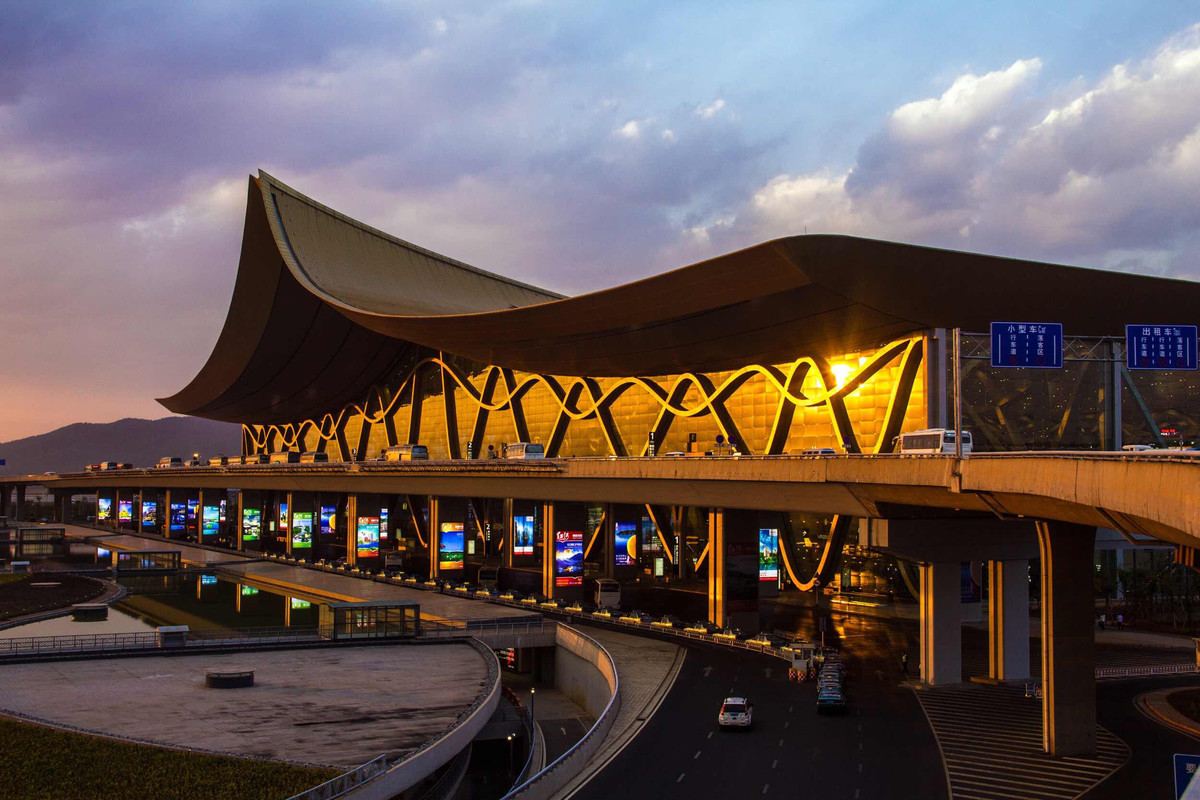
Kunming airport car rental for foreigners: making sense of roadside service stations when you can’t read Chinese
I was halfway up a winding stretch of tarmac north of Kunming last October, golden poplar leaves skittering across the road surface, when my low fuel light blinked on. The sky had that sharp, high-altitude blue that stings your eyes after an hour of driving, and the nearest service station sign was 200 metres ahead, blazed with large red Chinese characters I couldn’t translate for the life of me. I’d done a handful of Yunnan self-drive trips by then, but that first stop still reminded me how easy it is to feel out of your depth when you can’t read the local script, even when everyone around you is going out of their way to help. Yunnan self-drive rental for foreigners has one bottleneck, and this is it.
Most people who book Kunming airport car rental for foreigners arrive bleary-eyed after a long flight, clutching their freshly arranged temporary driving licence, and jump straight onto the ring road heading for Dali without a second thought for what they’ll encounter when they need to pull over for fuel, a snack, or a quick check of their tyres. It’s not complicated once you know the small, unwritten cues, but a bit of foreknowledge saves you standing in the forecourt fumbling with your phone translation app for 10 minutes while a queue of local drivers waits patiently behind you. That is the side of Dali Lijiang car rental for foreigners the brochures leave out.
What to expect the second you pull into a service station forecourt
First off, every single pump has an attendant. You will never have to figure out how to operate a self-service pump, which is a huge relief when you can’t read the labels. You don’t even need to remember the exact Chinese name for petrol. Just gesture at your fuel cap, hold up one finger, and they’ll know you want the standard 92 octane unleaded that works perfectly for all the petrol vehicles in the rental fleet. If you’re driving the bigger 2.0T Tank 300 for a trip up to Shangri-La, hold up two fingers for the higher octane 95, and that’s all the communication you’ll need.
I made a daft mistake on that first trip. I climbed out of the driver’s seat, walked around to the pump, and started gesturing wildly at the dashboard fuel gauge like I was performing a bad charades routine. The attendant just laughed, waved me back into the car, and filled the tank up exactly to full. I later realised that if you just pass them your car key and hold up your hand with the number of litres you want, or tap the fuel gauge on your dashboard twice, they will get it immediately. No translation required.
Paying is the part that catches most new foreign drivers out. You can’t pay at the pump. Every single service station has a small separate kiosk, usually at the entrance to the forecourt, where you go to settle your bill after the attendant has finished filling your tank. I once spent five minutes patting my pockets for my wallet next to the pump, confused why the attendant was waving me away towards the little building, until a local farmer in a battered pickup leaned out his window and pointed at the kiosk, grinning like he’d seen a hundred tourists make the exact same mistake.
There’s no need to try and explain yourself at the kiosk either. The attendant will already know which pump number you were at, because they watch every car pull in. Just tell them the pump number, hand over the cash, and they’ll give you your change. If you’re not sure what the pump number is, just point back at your car, and they’ll glance over, spot it immediately, and process the payment for you.
The little extra perks you’ll find at every stop that no guidebook mentions
Once you’re past the fuel kiosk, the small attached shop is full of more useful stuff than you’d guess, even if you can’t read a single label on the shelves. Every single one sells cold bottled water, pre-packaged sweet potato snacks, tins of hot tea, and that salty, crispy broad bean snack that’s perfect for keeping you awake on long mountain drives. You don’t need to read the packaging. Just point at the thing you want, and the person behind the counter will tell you the price on a little digital display they hold up for you to see. No haggling, no hidden charges, it’s all straightforward.
Last month, I was driving a VW Lavida 1.5L up the Erhai lake loop outside Dali when I noticed my front tyre was looking a little soft. I pulled into the next service station I saw, gestured at the tyre, and the attendant pulled out an air compressor, checked all four tyres, topped them all up, and refused to take any money from me. That’s standard, by the way. All service stations will top up your tyres for free, and most will wipe your front windscreen down with a squeegee while you’re waiting to pay. It’s a tiny courtesy, but it makes all the difference when you’ve got three hours of mountain driving ahead of you and the windscreen is splattered with midges.
If you’re travelling with a group, or you’ve been driving for four hours straight, almost every service station along the main Kunming to Dali and Dali to Lijiang routes has a small, clean public toilet at the back of the site. No tickets, no charges, you just walk in and use it. I always keep a small pack of tissues in the door pocket of the rental car, just in case, but most of the time they’ve got toilet paper stocked anyway.
It’s worth noting that none of these stations have electric vehicle charging points, which makes total sense when you remember that all the vehicles available for Kunming airport car rental for foreigners are petrol only. No unexpected surprises there, no last minute panics looking for a charger that doesn’t exist.
Tips for longer road trips heading north to Dali and Lijiang
If you’re planning one of the popular multi-stop itineraries that takes you from Kunming to Dali, then on to Lijiang and Shangri-La, you’ll be looking at Dali Lijiang car rental for foreigners options at some point, and a lot of people ask me about one-way drop offs. The one-way return fee for dropping the car off in Lijiang is 1500, which works out much simpler than driving all the way back to Kunming when your holiday time is limited. I did that exact trip last spring, wild azaleas blooming all over the hillsides around Dali, and I stopped at six different service stations along the route, and not once did I need to type a single Chinese character into my phone to get what I needed.
That trip I was driving the Tank 300 2.0T, which comes in at 400 per day with a 5000 rental deposit and a 300 km per day limit. I was a little worried at first that I’d end up over the daily limit on the winding back roads around Lijiang, but the attendants at every service station I stopped in were happy to point out the shorter, quieter scenic routes that didn’t add unnecessary kilometres to my day. No shared app, no complicated translation, just a quick gesture at my crumpled paper map and a few hand signals, and I was on my way.
For the smaller, more economical petrol models, the VW Lavida 1.5L or Jetta 1.4T come in at 260 per day, with a 3000 rental deposit and unlimited mileage, which is perfect if you’re sticking to the main paved roads around Erhai lake and the old town of Lijiang. I’ve put over 800 km in one of those in a single weekend, no issues at all, and every service station attendant knew exactly what fuel it needed without me having to say a word.
A few small, practical things I wish someone had told me before my first Yunnan self-drive rental for foreigners trip. Keep a small stack of 10 and 20 RMB notes in the car door pocket, it makes paying for small snacks and fuel top ups so much faster. If you’re not sure which exit to take off the motorway, pull over at the next service station, show your navigation screen to the attendant at the kiosk, and they will point you in the right direction. They all know the local roads far better than any GPS.
One time I misjudged a narrow stretch of road outside a village near Dali and scraped the side of the car against a low stone wall. I pulled into the nearest service station, gestured at the scratch on the door, and the attendant brought over a bottle of soapy water and a cloth, wiped it down, and the scratch vanished completely. It was one of those light marks that didn’t damage the primer at all, which the rental terms cover for free, no charges to me. I didn’t even have to call anyone, it was sorted right there in the forecourt.
Remember the rest of the rental terms, too. The rental deposit is refunded 5-7 working days after you return the car, once the traffic fine check is complete. Insurance includes both compulsory and commercial cover. Minor scratches under 1500 are paid by the client, any damage above 1500 goes through insurance with the client bearing 30%. There are no downtime or depreciation charges for paintwork or replaced parts, and downtime is waived within 5 days for major damage. If the vehicle breaks down for a mechanical reason, that is covered, but towing for a client-caused reason is at the client’s expense. The 600 booking deposit is non-refundable if you cancel for personal reasons, and the China temporary driving licence can be arranged for 1500 without you needing to attend in person.
You don’t need to be fluent in Chinese to do this. You don’t even need to know more than half a dozen words. All the service station staff that work along these main Yunnan tourist routes are used to foreign drivers, they’ve seen every possible mix of confused gestures and crumpled maps, and they’d far rather help you get on your way safely than make things difficult. I’ve never once had a bad experience at a roadside stop in 12 months of driving around these roads.
The last time I pulled into a service station just outside Kunming airport to top up the tank before dropping the car off, the attendant handed me a free handful of boiled quail eggs from the small shop counter, no charge, no explanation, just a smile and a wave as I climbed back into the driver’s seat. It’s those small, unplanned moments that make a self-drive trip around Yunnan so much better than travelling on a bus or a train.
You don’t have to plan every single stop in advance. Just follow the road, pull over when you see a service station that looks busy, and you’ll work out the routine in 10 minutes flat.