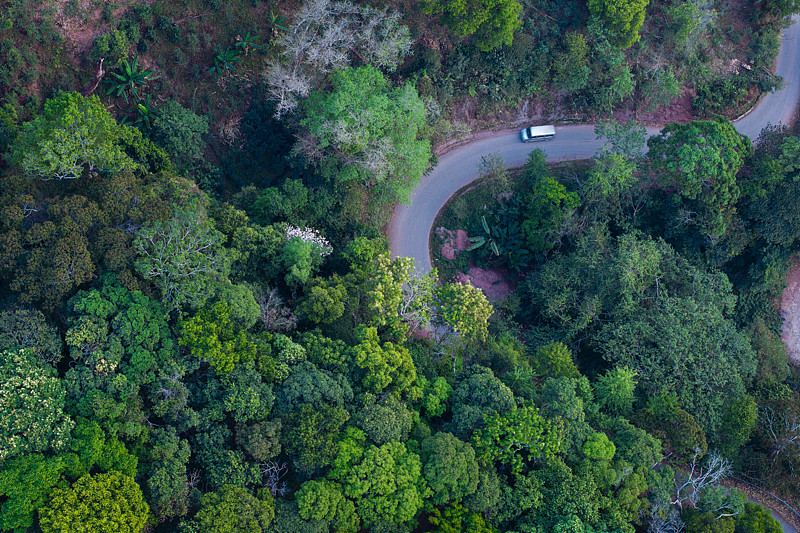
Whenever a route climbs beyond the gentle valleys, guests ask about altitude and whether it will affect the driving, and the run from Dali and Lijiang up to Shangri-La is the common place the question becomes real. The good news is that this is a manageable ascent rather than a sudden leap, and a little understanding of how altitude works goes a long way. I have a separate piece focused on the Jade Dragon Snow Mountain, so this guide covers the broader journey across the three towns, how the body responds as the height increases, and what that means behind the wheel. Treat it as practical planning rather than a medical lecture, and it will help you travel both comfortably and safely.
The heights you actually pass through
It helps to put numbers to the journey, because the progression is gentler than people expect. Dali sits around two thousand metres, Lijiang a little higher at roughly two thousand four hundred, and the road then climbs toward Shangri-La at about three thousand three hundred. The passes along the way are higher than the towns themselves, but you cross them rather than linger, and the vehicle does the work. What matters is that you are not going from sea level to the top in one jump; you have already spent a couple of days around two thousand metres by the time the road climbs, which gives the body time to begin adjusting. The northwest loop notes show this step-by-step in the itinerary.
How altitude sickness shows up
At these moderate heights, serious problems are uncommon, but mild symptoms are familiar and worth recognising. A slight headache, a touch of breathlessness on exertion, trouble sleeping, or a mild sense of fatigue can appear, especially in the first night or two higher up. Most people adjust within a day or two as the body adapts, and the symptoms ease. The useful signs to take seriously are symptoms that worsen rather than settle, or a severe headache that rest and fluids do not touch; in that case the sensible move is to descend to a lower town and seek advice rather than push higher. Knowing the difference between a mild adjustment and a warning lets you respond calmly instead of either ignoring symptoms or panicking at the first headache.
Why a gradual ascent matters
The single best protection is the slow climb the route already gives you if you let it. Spend time in Dali and Lijiang first, do not rush straight to the highest town on the first day, and build the Shangri-La leg as a natural continuation after a few nights at lower height. This pacing is the same principle mountaineers use, and it is far more effective than any shortcut. On the drive up, take breaks at the viewpoints, walk slowly, and give yourself a relaxed afternoon on arrival rather than heading straight out on a strenuous walk. A good night at the new altitude is often when the real adjustment happens, and keeping the first evening gentle helps it along.
How thin air affects the driving
Altitude changes the driver as well as the body, and it is worth noting. Mild symptoms can dull concentration slightly, much like tiredness, so keep the driving smooth and well within your comfort, with longer gaps between cars on the climbs. The engine also has less dense air to work with, which you may notice as slightly gentler acceleration on steep sections, though the car handles it without trouble; there is no special technique needed, just a little patience on the uphill. The descents are where care matters more: use a lower gear to hold speed rather than riding the brakes, which is the standard advice for long downhill runs and keeps them from overheating. The mountain road bends and descents guide covers that in detail.
Practical habits that help the body adapt
A few simple things make a genuine difference. Drink plenty of water, since the drier mountain air and travel itself dehydrate you, and go easy on alcohol on the first higher nights, since it worsens both sleep and hydration. Eat light rather than heavy, keep warm as the temperature drops with height, and avoid a hard workout on arrival. If you want the reassurance of oxygen, the convenience stores and clinics in the higher towns carry small cans, and most hotels can point you to them; many travellers simply use them as a backup and never need them. None of this is complicated, and together these habits make the adjustment smooth.
Choosing the route and the car
If altitude is a concern, the standard loop through Dali, Lijiang and then Shangri-La is the friendly way to do it, because the climb is staged over days. The saloon is perfectly adequate for these roads, while some guests prefer the Tank 300 for the confidence of four-wheel drive on the higher passes, though neither the choice nor the mileage cap should be decided without a look at the mileage limit notes. For anyone who would rather not go that high, the Dali and Lijiang region alone makes a complete and rewarding trip at around two thousand metres, with no pressure to climb at all. The route is a choice, not an obligation.
The short version
Dali is around two thousand metres, Lijiang two thousand four hundred, Shangri-La about three thousand three hundred, so the ascent is gradual and the body adapts along the way. Mild headache or breathlessness is common and usually settles; worsening symptoms mean descend and seek advice. Drive smoothly, use a lower gear downhill, and keep hydrated and rested. Tell me your planned route and how you feel about heights, and I will stage the climb and suggest the car so the journey stays comfortable from the lakes right up to the Tibetan plateau edge.
If you are arranging a trip, this Blue Moon Valley guide explains the practical steps.
Zara
Yunnan Province International Travel Agency (Group) Co., Ltd.
WeChat/WhatsApp: +86 13759155671
WeChat handle: qxzj7557
Email: [email protected]